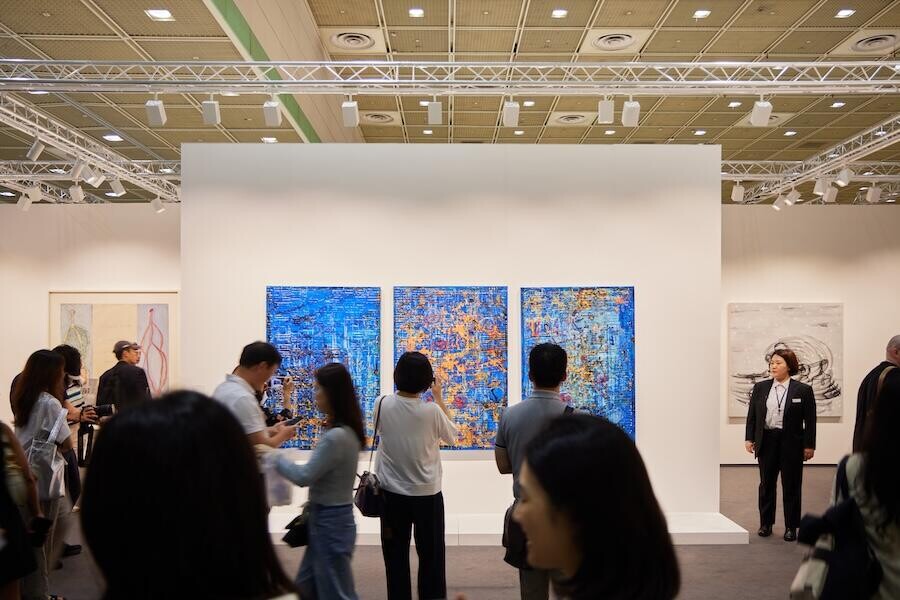
The separation represents a change in venue rather than the end of the partnership. However, without the convenience of holding both fairs in the same building, Kiaf will face greater pressure to demonstrate its own role in connecting Korean artists and galleries with the international market.
Frieze Seoul will relocate to Dongdaemun Design Plaza in 2027, ending five consecutive years in which it was held alongside Kiaf Seoul at COEX. The move is linked to the planned redevelopment of COEX. The two organisations intend to retain joint tickets and collaborative programmes, but Kiaf will operate at a separate venue from Frieze for the first time since their concurrent editions began in 2022.
Frieze announced on August 14 that its sixth Seoul edition would take place at DDP. Designed by Zaha Hadid and opened in 2014, the venue offers a more concentrated exhibition footprint. Frieze said the spatial change could create new possibilities for gallery presentations.
Kiaf is expected to remain at COEX in 2027. The Galleries Association of Korea and Frieze have said joint programming and ticketing will continue after the venues separate. Frieze has also stated that it intends to maintain a long-term presence in Seoul and Korea. The move therefore should not be interpreted as a withdrawal from the Korean market or the end of its relationship with Kiaf.
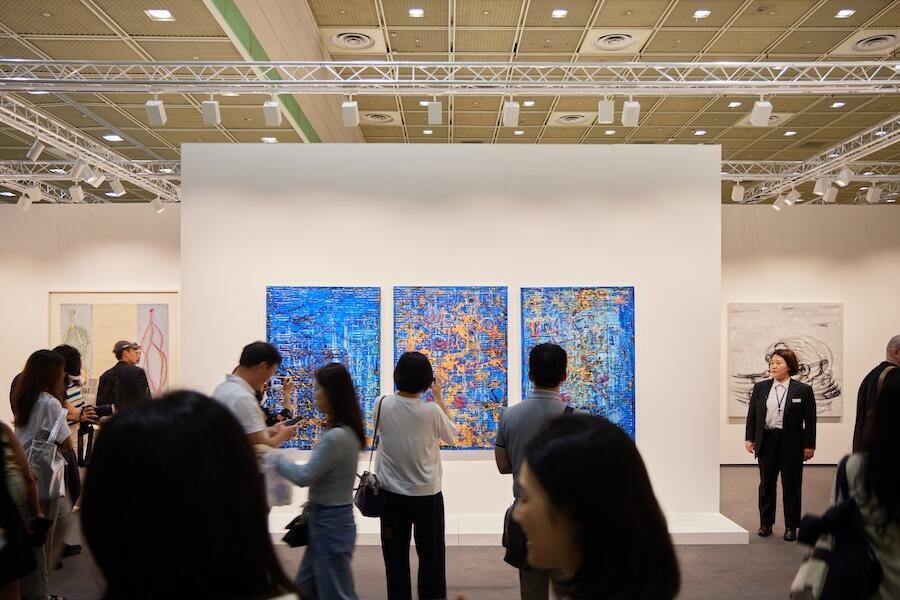
This year will be the final edition in which both fairs operate under one roof. Kiaf Seoul, scheduled for September 2–6, will host 175 galleries from 18 countries, including 127 Korean galleries. Frieze Seoul will bring together 133 galleries from 30 countries and territories from September 2–5.
According to figures released by Frieze, its 2025 Seoul edition attracted 70000 visitors from 48 countries, including representatives from more than 160 museums and institutions. Holding both fairs at COEX allowed visitors to attend them without travelling between different parts of the city.
Whether the same level of crossover attendance can be maintained after the separation remains uncertain. Even visitors holding joint tickets may allocate more time to one fair because of travel and scheduling. Galleries will also need to adjust staffing, transportation and collector appointments to two venues.
The separation could nevertheless allow Kiaf to define a role distinct from Frieze. Alongside Frieze’s function of attracting major international galleries and collectors, Kiaf will need its own criteria and programmes for connecting Korean artists and galleries with overseas institutions and markets.
Differences are already visible in the 2026 programmes. Frieze will operate Focus, in which 16 galleries established in or after 2014 each present one artist. It has also introduced Spotlight, which revisits underrepresented art-historical positions, and Material Practice, which examines work across craft, design and contemporary art.
Kiaf has appointed an external creative director for the first time, placing Kuho Jung in charge of spatial design and special exhibitions. Kiaf Plus will feature 19 Korean and international galleries working with younger artists and emerging spaces, while 15 galleries will operate solo booths.
Kiaf Highlights has shifted from its previous emphasis on younger artists to the reconsideration of 10 mid-career artists. Kiaf has stated that continuity of practice, distinctive visual language and art-historical significance will be considered ahead of sales performance and commercial appeal.
This direction corresponds in part with current collector spending. In the Art Basel and UBS survey of high-net-worth collectors, 66% of respondents bought work by an artist they had newly discovered. Emerging and early-career artists, however, received 35% of total art spending, compared with 44% for established artists.
A similar division is visible in Korean auction data. Works below KRW5million accounted for 74.7% of successful lots, while auction value remained concentrated among artists with established exhibition and transaction records, including Kim Whanki, Lee Ufan, Lee Bae and Kim Tschang-yeul.
Kiaf could therefore develop a clearer position by presenting mid-career artists and the accumulated history of Korean modern and contemporary art in a systematic way. Repeatedly displaying already familiar names, however, would not be enough to distinguish it from Frieze or other international fairs. Research, institutional exhibitions and overseas gallery partnerships would need to follow.
Frieze’s move to DDP could also expand the geographical range of Seoul Art Week. An additional hub in Dongdaemun could form a broader route linking gallery districts in Samcheong, Euljiro, Hannam and Cheongdam. Frieze has said its citywide programme, including Neighborhood Nights, will continue in 2027.
It remains too early to determine whether two art hubs will generate a larger market. Without coordinated transport, opening hours and preview schedules, overseas visitors may choose only one fair or spend less time at each. Attendance across both venues and gallery-level consultations and sales will be more relevant measures than joint-ticket sales alone.
The 2027 edition will be the first test of whether Kiaf can demonstrate its own competitiveness without the crossover audience created by sharing a building with Frieze. If it strengthens research, overseas distribution and institutional exchange for Korean artists, the separation may be assessed as an opportunity to clarify the functions of both fairs and broaden Seoul’s art-market infrastructure.
SayArt.net
Jason Yim yimjongho1969@gmail.com