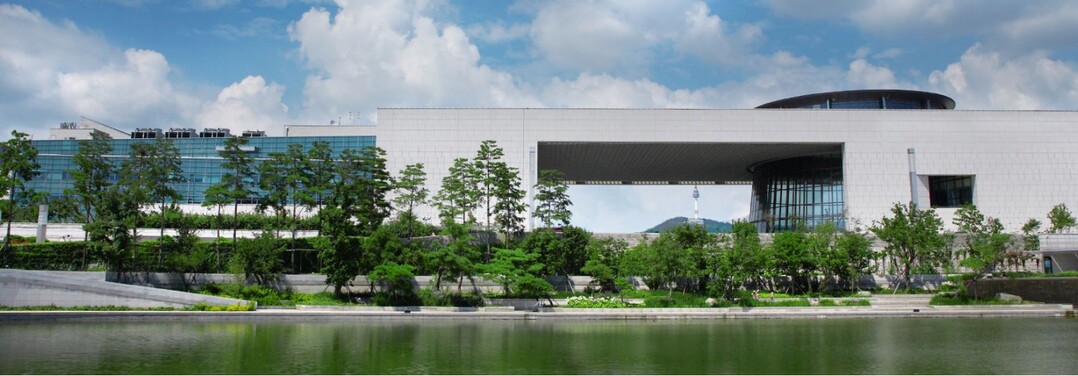
One of the most unexpected beneficiaries of Netflix’s global hit KPop Demon Hunters has been Korea’s largest national museum. As visitor numbers surge on the back of K-culture’s expanding influence, the National Museum of Korea now faces a pivotal question: should it capitalize on the momentum by introducing entrance fees, or maintain free admission in case the boom proves temporary and a new fee deters visitors?
The issue has reignited a long-running debate over sustainability versus accessibility. Supporters of paid admission argue that free entry undermines long-term management and service quality, while opponents stress the importance of guaranteeing universal access to culture.
The discussion took center stage at a recent seminar hosted by the Korean Museum Association, where experts, policymakers and museum professionals debated for more than three hours whether national museums should charge admission and how services could be improved.
“We must confront the structural limitations of the free admission policy that has been in place for the past 17 years and the realities of operating national and public museums,” said Kim Young-ho, honorary chair of the Korean Society of Museum Studies. “Visitors who pay for admission directly contribute to the preservation and development of cultural heritage.”
Kook Sung-ha, a professor at Yonsei University’s Graduate School of Education, pointed to Korea’s shrinking working-age population and rapid aging. “We need to improve the revenue structure of national museums not just for today, but for future generations,” he said.
Currently, admission to the National Museum of Korea remains free, except for select special exhibitions. By contrast, major museums in the United States and France — including the Metropolitan Museum of Art and the Louvre — typically charge between $25 and $30 per adult.
“Even in Britain, where the government spends around £500 million annually to sustain free museum admission, there are growing calls for reconsideration, especially when compared with the revenue generated by institutions like the Louvre,” said Kim Hye-in, a research fellow at the Korea Culture & Tourism Institute.
Some participants argued that if the National Museum were to introduce fees, it could set a precedent that would help smaller public and private museums justify charging or raising admission prices to secure maintenance budgets.
“Paid admission can strengthen the pricing legitimacy of private museums,” said Shim Jae-in, head of the Gyeonggi-do Museum Association. “Some visitors may even shift toward smaller institutions that offer more specialized or diverse exhibitions.”
Critics, however, warned against what they described as a premature response to a “mirage of popularity.” They stressed that the current boom may be driven by fleeting trends rather than lasting demand.
“There is no guarantee that K-content like KPop Demon Hunters, which helped trigger the recent surge, will continue to draw crowds,” said Lee Eun-hee, professor emeritus of consumer studies at Inha University. “Consumer trends change quickly. Proposals to charge different fees for Koreans and foreigners are also problematic, since foreign visitors help promote Korean culture globally through social media.”
Foreign tourists account for less than 4 percent of visitors to the National Museum of Korea — far below institutions such as the Louvre, where foreigners make up about 77 percent of attendees.
Opponents of paid admission also pointed to structural issues in museum financing. At present, all revenue from rentals, museum shops and ticketed special exhibitions flows into the national treasury, while operating costs are fully covered by the state. Last year, the National Museum of Korea generated 1.94 billion won ($1.32 million) in revenue, compared with expenditures totaling 232.55 billion won, highlighting a stark imbalance.
“Charging admission may ultimately be inevitable to ease the burden on taxpayers and increase investment in preservation, digitization and research,” said Jung Chang-soo, head of the Fiscal Reform Institute. “But to gain public support, the museum must clearly explain how the revenue will be used — for example, to improve access for disadvantaged groups.”
Free admission to permanent exhibitions at national museums was introduced in May 2008 under the Lee Myung-bak administration to expand access to cultural experiences. Since then, visitor numbers have steadily increased, with the National Museum of Korea seeing particularly sharp growth after the pandemic, driven by popular exhibitions and renewed interest in Korean culture.
This year, the museum surpassed 5 million visitors on Oct. 15, placing it among the world’s top five most visited museums according to The Art Newspaper’s 2024 rankings. The Yongsan complex, which opened in 2005, was originally designed to accommodate up to 4 million visitors annually, raising concerns about overcrowding and insufficient service infrastructure.
Fueling the debate further, museum director You Hong-june said during a National Assembly audit in October that the institution “is reviewing various options regarding the timing and method of introducing admission fees.”
“We are moving from an era focused on expanding access to culture to one that demands more tailored, higher-quality services,” said Jo Han-hee, president of the Korean Museum Association. “Beyond admission fees, we also need institutional support such as tax incentives for corporate donations to ensure the long-term sustainability of museums.”
SayArt.net
Maria Kim sayart2022@gmail.com