Director Lee Je-hui's debut feature film "The Nonsense" challenges audiences with a psychological thriller that deliberately avoids easy answers. The movie, which had its world premiere at the Vancouver International Film Festival in October, stars Park Yong-woo and Oh Ah-yeon in a complex story about manipulation, faith, and the unknowable nature of human existence.
Unlike traditional crime thrillers that promise clear distinctions between good and evil, "The Nonsense" operates in a world of moral ambiguity. The film follows Yuna, played by Oh Ah-yeon, a hardened insurance claims adjuster who has become cynical about life. Her job requires her to detect fraud and lies from people seeking payouts, making her naturally suspicious of others.
Yuna's personal life is filled with tragedy and disappointment. Her father, a serial con man who never cared for his family, lies unconscious in a hospital after suffering a stroke. He has left behind only debts and a seemingly worthless piece of land. Her mother works constantly to pay off these debts while desperately turning to shamanic rituals and superstition, hoping for her husband's recovery in ways that deeply disturb Yuna.
The main plot begins when Yuna inherits a strange case from a colleague who suddenly quit. The case involves a man who apparently committed suicide by drowning, but unusually named a complete stranger as his life insurance beneficiary. This stranger turns out to be Soon-gyu, played by Park Yong-woo, a comedian who calls himself a "laughter therapist" and claims to heal people's trauma through humor and comedy routines.
Soon-gyu presents himself as an unsettling mixture of snake-oil salesman and caring mentor. He is simultaneously charming and slimy, amusing yet disturbing. When Yuna first meets him, he launches into a bizarre performance, making strange gestures and crawling across the floor while she watches without any reaction.
As Yuna investigates further, she discovers that many people view Soon-gyu as a kind of spiritual guide. They depend on him for emotional relief through intensive counseling sessions and talk therapy. These sessions often involve role-playing exercises where Soon-gyu acts out the role of someone who has hurt his patients, allowing them to express their anger and rage toward him.
Initially, Yuna is skeptical of Soon-gyu's methods. However, as her own emotional vulnerabilities become exposed - particularly her mother's increasing reliance on superstition and her own buried guilt and hatred toward her father - she finds herself gradually drawn into this enigmatic figure's strange therapeutic world.
While "The Nonsense" follows the basic structure of a commercial thriller, it stands out due to the exceptional performances of its cast. Park Yong-woo, an industry veteran who has typically played supporting rather than starring roles, delivers what many consider a revelatory performance. He recently appeared in Disney's "Hunger with a Scalpel" as a serial killer disguised as a laundry owner and in "Walking on Thin Ice" as a corrupt police officer.
Park's portrayal of Soon-gyu is chillingly ambiguous. His deep-set eyes beneath a calm forehead create a hypnotic effect that draws viewers in despite their suspicions about his true nature. Extended scenes of his consultation sessions, filmed in long, uninterrupted takes, have a theatrical quality. Park masterfully maintains tension as he seamlessly shifts between roles of tormentor and protector during his dramatized therapy routines.
The film raises disturbing questions about Soon-gyu's true motives. While it's clear he cannot be trusted, viewers are left wondering whether he is simply exploiting vulnerable people or if there is some twisted form of genuine care in his methods. This ambiguity is reinforced when Yuna herself seems to find some peace after an intense session with him, suggesting that his manipulation might have some beneficial effects.
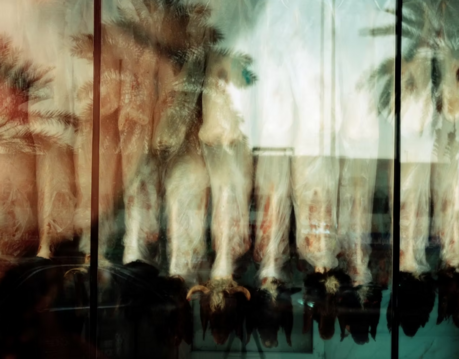
Director Lee Je-hui uses cinematography effectively to enhance the film's unsettling atmosphere. As a first-time director, Lee bathes his scenes in sickly green and twilight orange colors. Yuna is often positioned in pools of light while Soon-gyu's spaces are shrouded in shadows. As the story progresses, the two characters are filmed in complementary colors that gradually blend together, visually representing Yuna's psychological entanglement with Soon-gyu.
What makes "The Nonsense" particularly unique is how it uses the thriller genre to explore deeper philosophical questions about the nature of existence. Like classic thrillers by directors such as Alfred Hitchcock, the film gestures toward the ineffable qualities of life that escape easy explanations. Lee Je-hui uses psychological manipulation and suspense to examine themes that go far beyond typical genre conventions.
The film's title itself reflects its central theme: the nonsense and absurdity of life where nothing is entirely true and everything remains possible. In such a world, people may need to make what philosopher Søren Kierkegaard called a "leap into the void" when reason fails, regardless of how misguided such faith might be.
At a press conference before the film's release, Director Lee explained his inspiration came from documentaries about religious cults. He found their beliefs completely incomprehensible and wondered how anyone could fall for such things. However, he noticed that for the believers themselves, their faith seemed completely sincere. The gap between an outsider's disbelief and a believer's conviction was where he first conceived the concept of "nonsense."
The film suggests there is something both tragic and comic about people who become so completely manipulated that they name their guru as the beneficiary of their life insurance policies. Faith has its own internal logic, no matter how crazy it may appear to outsiders. What proves truly disturbing is not just that such gullibility exists, but the irony of the human condition itself - that such psychological descents can seem so believable and understandable, even when their emotional undercurrents remain forever beyond everyone's grasp.
The most psychologically gripping moments in "The Nonsense" carry elements of dark comedy. Soon-gyu's empty one-liners interrupt conversations at strange moments, creating jarring discord that increases the suspense with almost unbearable unease. His office is filled with strange devices that a clown might use, and children's show jingles play in the background, creating a suffocating sense of grotesque absurdity during intense encounters.
In one particularly bold directorial choice, the film's central confrontation between Yuna and Soon-gyu takes place during a game of Pop-up Pirate. The ending also resolves Yuna's and her family's problems in such a darkly ironic way that it almost reduces all the previous conflicts to a cruel joke.
In "The Nonsense," it is not only the characters who remain complex and mysterious, even to themselves; life itself becomes something that appears tragic when lived through but comedic when viewed from a distance.
The film's marketing strategy is also noteworthy. As a small-budget independent production with limited publicity, its promotional materials prominently feature an endorsement from renowned director Park Chan-wook. Park, the acclaimed filmmaker behind "Oldboy" and "The Handmaiden," reportedly praised the film as "truly unique, unconstrained by genre conventions."
While it may be ambitious to compare a first-time director with an established master filmmaker, it's easy to understand why Park Chan-wook noticed and chose to champion "The Nonsense." Park's 2022 film "Decision to Leave" took the form of a romantic mystery that used the detective story format as a starting point for exploring much more elusive themes - the incomprehensibility of desire and the impossibility of truly knowing another person. It was a perfect example of using genre conventions as a vehicle for examining the ambiguity at the heart of human experience.
Lee's work in "The Nonsense," despite some imperfections, aspires to reach similar heights. The film uses its insistence on the irreducible strangeness of human beliefs and the cruel ironies of existence to gesture toward that same unknowable territory that great thrillers explore. "The Nonsense" opened in theaters on Wednesday.