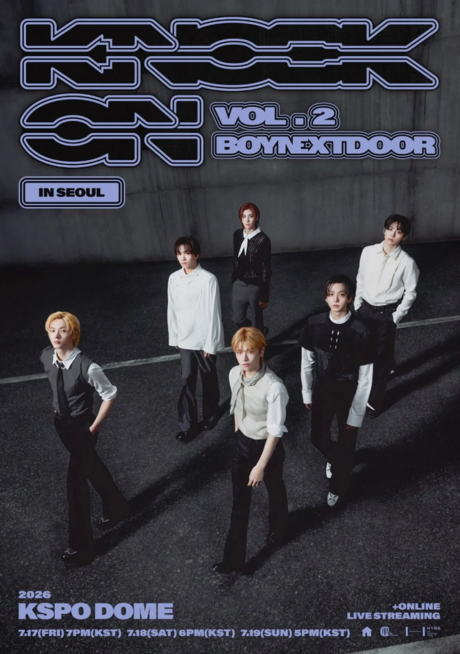
Sixteen organizations representing South Korea's cultural creators, including the influential Korea Broadcasters Association, issued a joint statement Tuesday demanding a comprehensive review of the government's National Artificial Intelligence Action Plan. Their primary concern centers on Action Item No. 32, which proposes revising copyright law to facilitate AI training on copyrighted works. The provision, set for implementation by the second quarter of 2026, could establish a controversial "use first, compensate later" system. This would allow AI companies to train their models on creative content without obtaining prior permission from rights holders, addressing compensation only after the fact.
The action plan, released last month by the presidentially-chaired National AI Strategy Committee, reflects South Korea's ambitious national goal of becoming one of the world's top three AI powers. The committee has repeatedly emphasized that "speed is everything," attaching strict deadlines to various policy measures. While the government's strong commitment to AI development is understandable in today's competitive technological landscape, critics argue that this single-minded rush threatens the foundations of K-culture—an equally critical driver of Korea's future economy and global soft power. The Ministry of Culture, Sports and Tourism would be tasked with preparing the copyright revisions, which aim to resolve what the committee calls "legal uncertainty" surrounding AI training data usage.
Creators' groups warn that the proposed approach would fundamentally undermine artists' basic right to control how their works are used. Although the plan includes provisions for eventual compensation, there are serious concerns that payment standards would be calculated according to formulas favorable to AI companies and prove grossly insufficient from creators' perspectives. This approach runs counter to emerging global norms. The European Union and Britain have implemented or are considering "opt-out" systems, where works are excluded from AI training only if creators explicitly refuse permission. Meanwhile, the United States is developing standards through ongoing copyright lawsuits against major AI companies, allowing courts to gradually define the boundaries of fair use and commercial exploitation.
The debate gained fresh urgency following the global proliferation of AI-generated images mimicking Studio Ghibli's distinctive animation style last spring. In November 2025, the renowned Japanese animation studio sent a cease-and-desist letter to OpenAI, arguing that even an opt-out system provided inadequate protection for creative works. Studio Ghibli insisted that prior authorization should be mandatory before its copyrighted material could be used for AI training, highlighting the significant gap between corporate AI development practices and creators' rights expectations in the artistic community.
Adding to creators' frustrations, the government established only a brief 20-day public consultation period for the AI Action Plan. After accounting for year-end holidays, stakeholders had approximately ten working days to analyze and respond to proposals that could fundamentally reshape Korea's cultural landscape for years to come. This compressed timeline reinforces widespread concerns that policymakers are prioritizing AI industry convenience over thorough consideration of long-term cultural ecosystem impacts and creator livelihoods.
While South Korea's ambition to lead in artificial intelligence is commendable, policymakers must recognize that treating creative content as a freely available public resource risks destroying the very ecosystem that produces it. K-culture—from K-pop and K-dramas to film, animation, and digital art—represents a cornerstone of national identity and a proven engine of economic growth. Rather than rushing toward second-quarter legislation, the government should slow down and listen more carefully to the voices of creators who form the backbone of this valuable cultural powerhouse. The future of both AI and culture depends on finding the right balance, not sacrificing one for the speed of the other.