South Korea’s art world is opening March with a set of developments that, taken together, reveal an industry recalibrating its identity — balancing celebrity influence, social engagement and institutional expansion.
Over the past week, three strands have stood out: a star-driven exhibition project in Gwangju, the return of a community-based peace art initiative, and new signals from the National Museum of Modern and Contemporary Art about its growth trajectory. Each reflects a different model of how art seeks relevance in 2026.
Celebrity as Cultural Catalyst
At the center of debate is a new exhibition project in Gwangju led by actor Kim Hee-sun, who is participating as a content director. The show, staged at a local cultural venue, features works by more than 20 Korean artists and positions itself as a hybrid between exhibition, storytelling and branded cultural experience.
The move underscores a broader shift: the increasing role of public figures in shaping curatorial narratives. While celebrity involvement can broaden audiences and attract media attention, it also raises questions about expertise and authority. Who defines artistic value — trained curators and critics, or cultural influencers with mass appeal?
The trend reflects a media-saturated environment in which exhibitions compete not only with one another but with streaming platforms, social media and global pop culture. In that ecosystem, visibility becomes currency. The risk, critics say, is that art may tilt toward spectacle.
Art as Civic Language
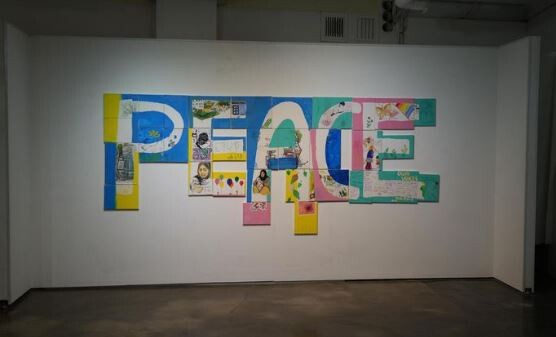
In contrast, the ongoing “Visual Voices” initiative — now in its third iteration — emphasizes participation over star power. Bringing together artists, refugees and local residents, the project uses posters, workshops and performances to address peace, well-being and coexistence.
Its premise is simple: art as a shared civic language. The initiative does not rely on market visibility or celebrity endorsement but on grassroots collaboration. In doing so, it taps into a long tradition of socially engaged art in Korea, particularly resonant in a country where public protest and cultural expression have historically intertwined.
Yet socially driven projects face their own challenges. Funding can be unstable, and long-term impact is difficult to measure. The question becomes whether such initiatives can move beyond symbolic gestures to shape policy or sustained public discourse.
Institutions Scaling Up
Meanwhile, the National Museum of Modern and Contemporary Art (MMCA) has signaled continued expansion following record attendance last year. The museum has outlined plans to deepen international partnerships and broaden digital access, positioning itself as both a national archive and a global platform.
This institutional momentum highlights another tension: the push for international recognition. Over the past decade, Korean contemporary art has gained traction abroad, supported by biennials, art fairs and museum collaborations. Institutional scaling reflects confidence — but also pressure.
Public museums must balance global ambition with domestic responsibility. As attendance grows, so do expectations for accessibility, education and regional representation. Expansion risks centralization if not paired with investment in local art ecosystems.
A Field in Negotiation
What unites these developments is not a single aesthetic direction but a shared negotiation over relevance.
The celebrity-driven exhibition speaks to art’s entanglement with entertainment and branding. The community initiative foregrounds art’s ethical and social responsibilities. The museum’s expansion reflects institutional consolidation within a competitive global market.
Together, they illustrate a sector asking fundamental questions: Is art primarily a cultural industry, a civic instrument, or a heritage institution? Can it be all three at once without diluting its core?
For South Korea, where cultural exports from K-pop to film have reshaped national soft power, the art world now faces similar pressures. Visibility is within reach. The deeper challenge is defining what that visibility stands for.
In the span of a single week, these parallel stories reveal an ecosystem in flux — not in crisis, but in conversation with itself about the terms of its future.
SayArt.net
Maria Kim sayart2022@gmail.com