SEOUL, June 18, 2026 — Korean culture is returning to one of Europe’s most important stages this summer, but not through stadium pop or screen-driven fandom. It is arriving through literature, pansori, dance, memory and the long shadow of history.
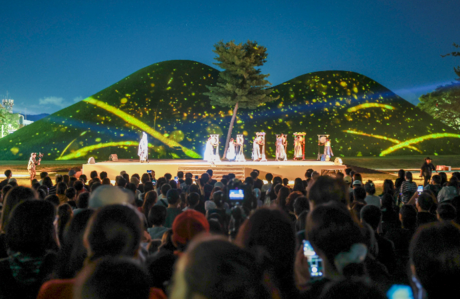
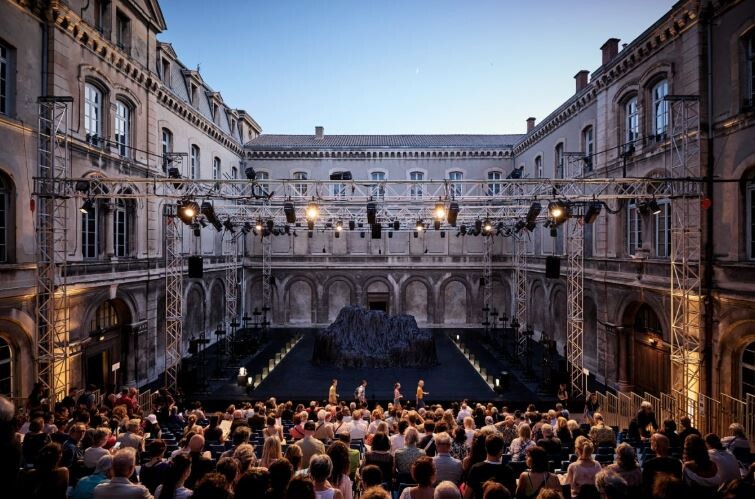
Nine Korean works have been invited to the Avignon Festival in France, which runs from July 4 to 25. It marks the first time in 28 years that Korean-language productions will officially appear at the festival, one of the most influential performing arts gatherings in the world. Korean has also been designated as the festival’s official guest language this year, giving the program a symbolic weight beyond the individual performances.
For international audiences, Korea is still often introduced through K-pop, K-dramas and cinema. Avignon offers a different entrance. It asks viewers to meet Korea not as a fast-moving export industry, but as a culture of voice, body, mourning and ritual.
The most closely watched program may be “Oiseau,” a lecture-performance based on Han Kang’s novel We Do Not Part. The work will feature French actress Isabelle Huppert and Korean actress Lee Hye-young reading the opening chapter of the novel, which looks back at the trauma of the Jeju massacre. Han, the Nobel Prize-winning Korean novelist, has become one of the clearest signs that Korean literature is no longer a regional interest but a central voice in world letters.
That matters because Korean literature travels differently from Korean pop. It does not arrive with choreography or fan chants. It arrives more quietly, through grief, weather, silence and sentences that often seem to hesitate before they wound. Han’s fiction, especially Human Acts and We Do Not Part, has given global readers a way to encounter modern Korean history through intimate human pain rather than textbook summary.
The Avignon program also reaches further back into Korea’s performing traditions. “Snow, Snow, Snow,” a project based on pansori, brings the Korean vocal tradition into a contemporary performance setting. Pansori is not simply old music. It is storytelling as endurance. One singer, one drummer and one long tale can carry humor, sorrow, satire and history in a single breath. To bring that form to Avignon is to show that tradition does not survive by remaining still. It survives by being heard again in unfamiliar rooms.
Other invited works extend the range of the Korean program. “KIN: Yeonhee Project I” fuses traditional dance and contemporary movement, while “Island Story” revisits the violence of the 1948 Jeju uprising. “1 Degree Celsius” turns to climate change, a subject that no longer belongs to one nation’s stage. Together, the works suggest a Korea that is not trying to decorate itself for foreign consumption, but to speak from its own wounds and questions.
The timing is also significant. South Korea and France are marking 140 years of diplomatic ties, and cultural exchange has become one of the most visible languages of that relationship. Yet the deeper story is not diplomacy alone. It is the widening definition of Korean culture itself.
For years, the global shorthand for Korea has been “K.” K-pop. K-drama. K-food. K-beauty. The prefix made Korean culture easy to export, but it also made it easy to flatten. Avignon may help complicate that picture. Korea is not only a producer of polished entertainment. It is also a country of oral traditions, unresolved memories, literary mourning and experimental stages.
That does not make the program less contemporary. It makes it more so. Around the world, audiences are asking how art can speak about violence, climate, migration and collective memory without turning them into slogans. Korean artists, shaped by colonial history, war, division, dictatorship, rapid modernization and digital speed, have no shortage of material. The question is not whether Korea has stories to tell. It is whether the world is ready to listen beyond the familiar surface.
Avignon gives that listening a stage.
If K-pop taught the world to chant in Korean, this summer’s Korean program in France may ask it to listen to Korean silences as well.
SayArt.net
Sharon Jung, guhuijeong784@gmail.com