There is an artist who freezes events.
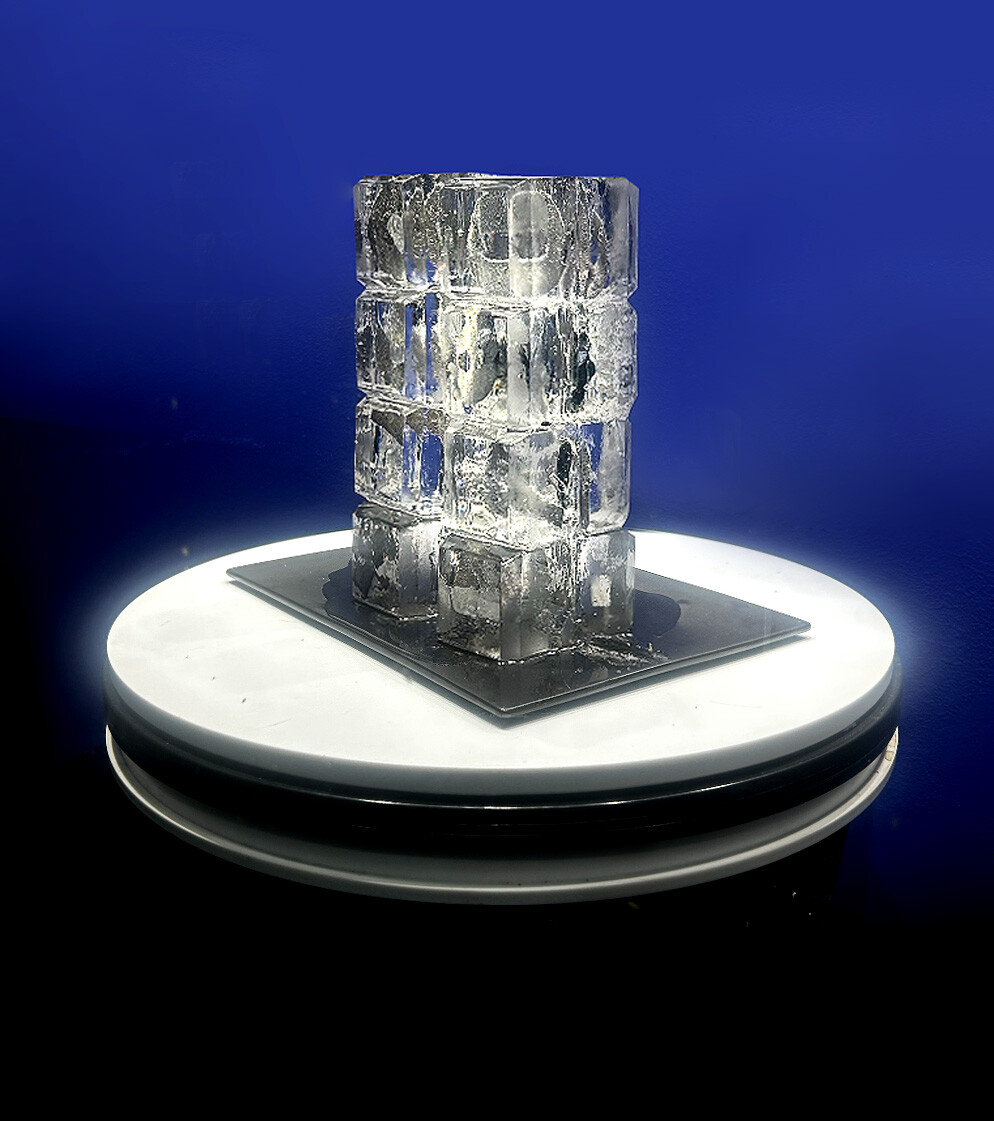
Sung Suh does not treat photography as a flat record of the past. He brings images of world-changing events into transparent materials such as resin, acrylic and epoxy, turning photographs into structures that seem to be trapped in ice, submerged in water or suspended between visibility and disappearance.
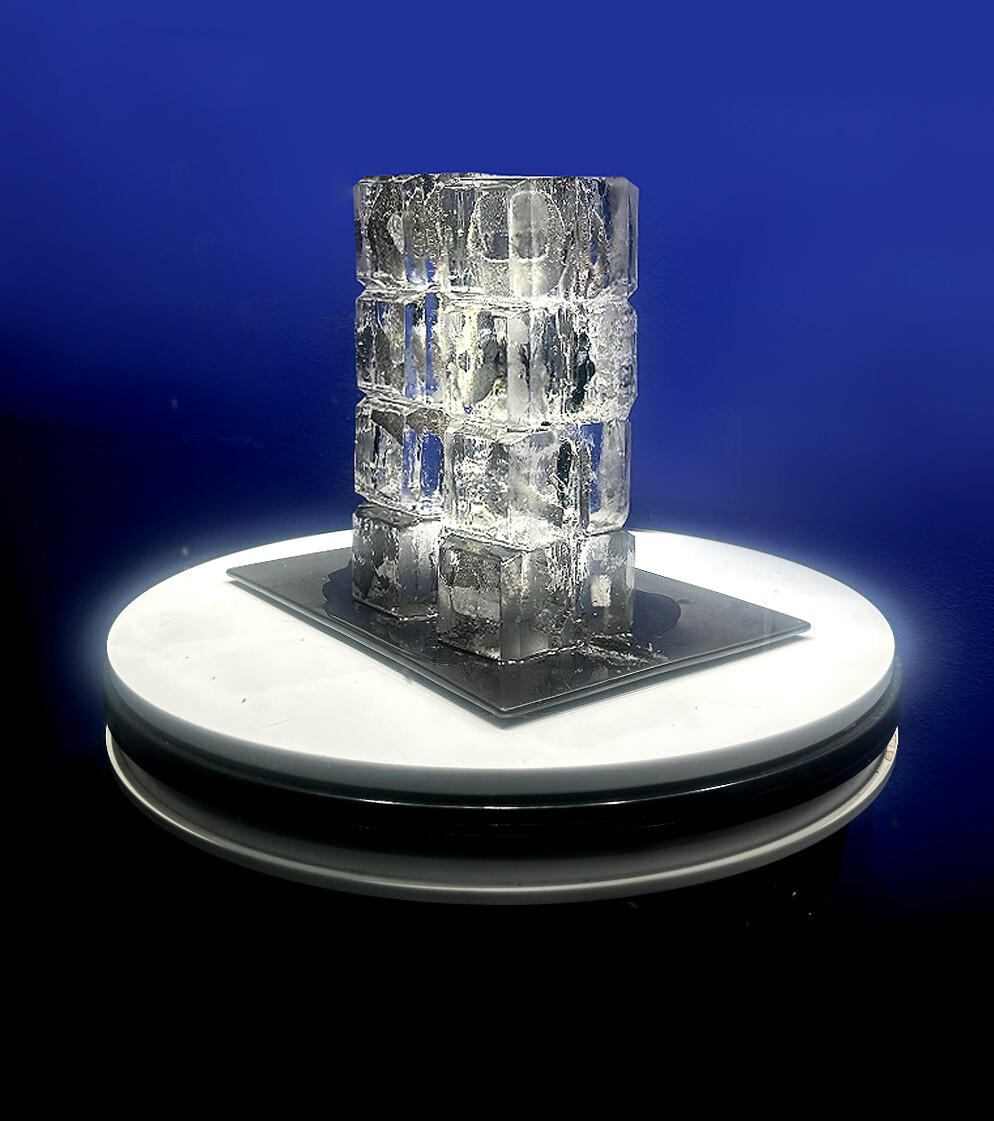
His work begins from Frozenism, a conceptual framework that uses the visual and material language of ice to examine time, memory and history. An earlier exhibition, Frozenism: Layers of Frozen Time and Memory, presented by MOOWOOSOO Gallery, described Sung Suh’s practice as a multimedia convergence project that explores the structures of time and the world through ice, stratification and record.
In Suh’s work, ice is never simply a cold material. It appears to preserve, but it also melts, cracks, clouds and transforms. Memory works in a similar way. Some memories remain but lose their original shape. Some seem to disappear before resurfacing unexpectedly. Others change meaning as they pass through individuals, societies and generations.
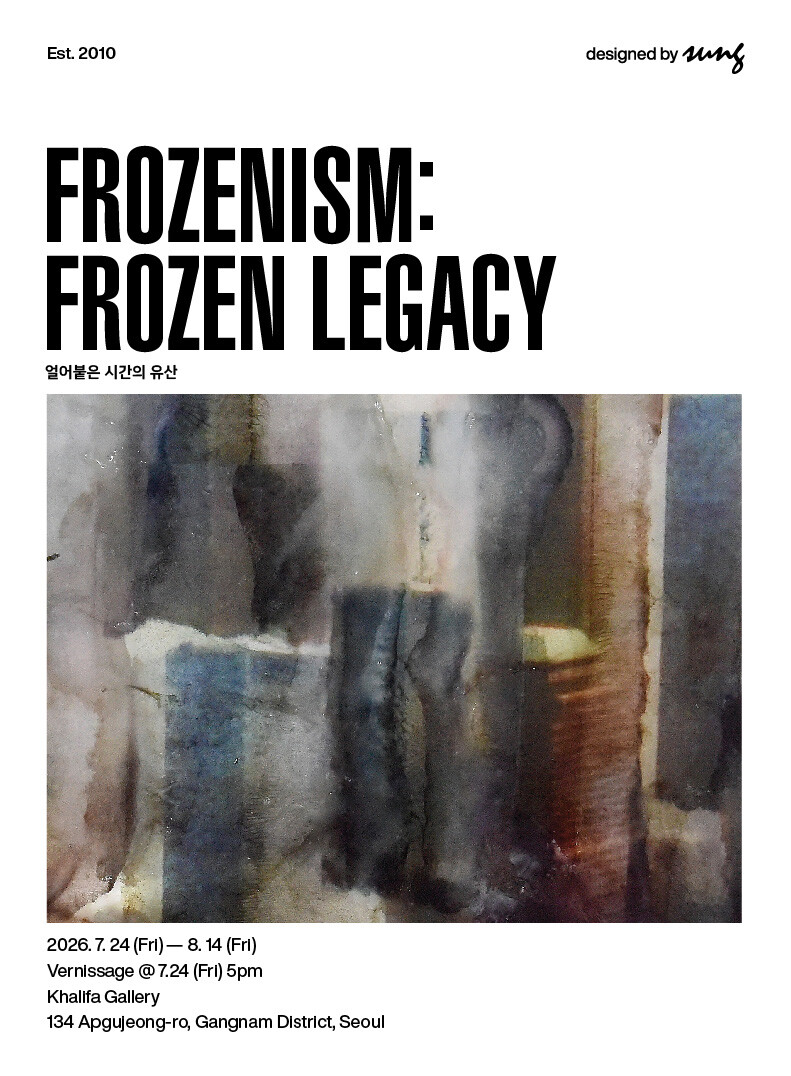
This is why Sung Suh’s exhibition Frozenism: Frozen Legacy – 얼어붙은 시간의 유산 feels less like a record of past tragedies than an inquiry into what remains after history has passed through human life. The exhibition addresses events including World War I, the atomic bombings of Hiroshima and Nagasaki, the Great East Japan Earthquake and tsunami, the Fukushima nuclear disaster, the COVID-19 pandemic, the global financial crisis and the September 11 attacks.
Yet Suh does not simply reproduce these events. He does not explain them as historical illustrations. Instead, he asks where those events remain now. Do they live in personal trauma, collective anxiety, social structures or the defensive instincts of later generations? Can a disaster truly become the past if its effects continue to shape the present?
Suh calls his practice Conceptual Photo Sculpture, or Frozen Time Sculpture. The term is important. His works are photographs, but they are also sculptural objects. Images are placed inside transparent materials, while light passes through and around them. The viewer’s gaze moves between surface and depth, clarity and distortion. Photography is no longer a rectangle on the wall. It becomes a structure of layered time.
Standing before the works, one may think of a darkroom. A sheet of photographic paper floats in liquid, and an image slowly appears where there was once only darkness. Suh’s images also do not reveal themselves all at once. They emerge, blur, sink and return. As a result, the events inside the works do not feel finished. They feel as if they are still in process.
The core of Frozenism can be understood through four temporal states: Protection, Stillness, Death and Transformation. Protection holds what may disappear. Stillness allows it to be seen again. Death reveals irreversible loss. Transformation shows how memory is reborn in another form. These are not fixed stages. They circulate within memory.
Some tragedies are preserved and forgotten at the same time. Some events appear still, yet continue to affect the present. Some memories seem to vanish, only to enter the lives of another generation. Suh’s distinctiveness lies in making this cycle visible not through explanation, but through material experience.
In this sense, his work differs from both traditional history painting and documentary photography. Documentary photography often testifies to the site of an event. Suh’s work asks what happens after the event. What remains when the scene is gone? In what form is memory preserved? When does a tragedy become the past, and when does it return as the present?
Sung Suh redefines photography as a language of memory. It is no longer only a window onto what has already happened. It becomes a way to preserve, distort, protect and question time itself. This is why he may be called a sculptor of frozen time.
His exhibition Frozenism: Frozen Legacy – 얼어붙은 시간의 유산 runs from July 24 to August 8, 2026, at Khalifa Gallery in Seoul. The gallery’s official website identifies its English name as Khalifa Gallery and lists its address as 134, Apgujeong-ro, Gangnam-gu, Seoul
[Sayart = Maria Kim]
sayart2022@gmail.com