SEOUL, June 18, 2026 — Two weeks after Centre Pompidou Hanwha opened in Seoul’s 63 Building, the question is no longer whether a major French museum can draw attention in South Korea. It can. The harder question is whether it can become part of Korea’s own artistic conversation.
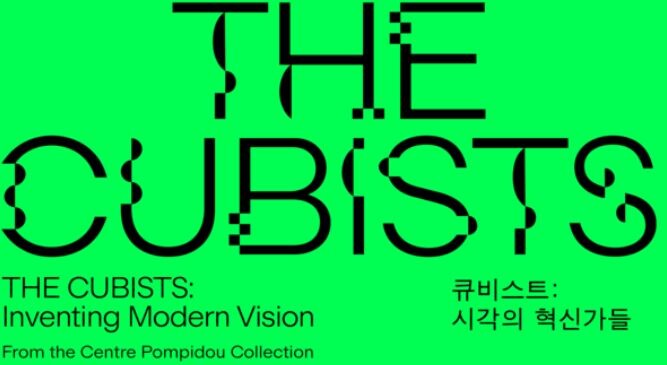
The new venue opened on June 4 in Yeouido, Seoul’s financial district, with its inaugural exhibition, The Cubists: Inventing Modern Vision. The show runs through Oct. 4 and brings Cubism — one of the defining visual revolutions of the 20th century — into a city that is itself constantly rebuilding how it wants to be seen.
For Seoul, the opening is both a cultural event and a statement of ambition. The city already has a dense museum landscape, a fast-growing gallery scene and one of Asia’s most visible art-market weeks through Frieze Seoul and Kiaf. The arrival of Centre Pompidou Hanwha adds something different: the weight of a European institutional brand, the reach of a Paris collection and the promise of a longer cultural bridge between Korea and France.
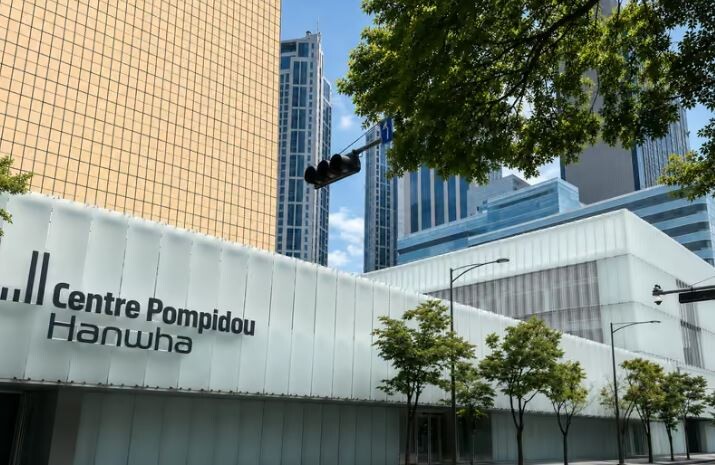
The museum occupies a redesigned annex of the 63 Building, long one of Seoul’s most recognizable towers. Designed by French architect Jean-Michel Wilmotte, the space has been described as a “light box,” a translucent structure meant to glow by night against the Han River skyline. It is a striking image: a former aquarium converted into a container for modern art, placed at the base of a building associated more with finance and corporate power than with the quiet act of looking.
That contrast is part of the story. Centre Pompidou Hanwha is not opening in a neutral place. It is opening inside a symbolic piece of corporate Seoul, backed by the Hanwha Foundation of Culture and connected to one of Korea’s major conglomerates. The result is a museum that carries several identities at once: cultural institution, corporate project, French-Korean partnership and new player in Asia’s museum competition.
Its first exhibition is a careful choice. Cubism is familiar enough to attract a broad audience, but deep enough to justify serious curatorial attention. The Cubists: Inventing Modern Vision traces the emergence and spread of Cubism through works by Pablo Picasso, Georges Braque, Juan Gris, Fernand Léger, Sonia and Robert Delaunay and other artists. Rather than presenting Cubism as the work of a few heroic names, the exhibition frames it as a wider collective experiment in seeing.
That matters. Cubism changed modern art because it broke the single viewpoint. It fractured the object, turned space inside out and asked the viewer to accept several angles at once. In Seoul, that idea feels unexpectedly current. This is a city of layered perspectives: old neighborhoods beside glass towers, private capital beside public culture, global fairs beside local studios, imported masterpieces beside Korean artists still fighting for international visibility.
 The most important part of the exhibition may therefore be its “Korea Focus” section. By placing Korean artists alongside the Western history of Cubism and the avant-garde, the museum attempts to avoid the simplest criticism of foreign museum expansions: that they merely export European greatness to a receptive local market. The Korean section suggests another reading. Modernism did not simply travel from Paris outward. It was received, translated, resisted and remade elsewhere.
That distinction will determine the venue’s credibility in Seoul. If Centre Pompidou Hanwha becomes only a showroom for masterpieces from Paris, it may succeed commercially but remain culturally thin. If it uses the Pompidou collection to ask how Korean artists have entered, altered and challenged global modernism, it could become more than a satellite. It could become a site of interpretation.
The timing gives the project added significance. The original Centre Pompidou in Paris is undergoing a major transformation, with its iconic building closed for renovation until 2030. During that period, the institution’s collections and programs are being extended through partner venues in France and abroad under a broader international strategy. Seoul is now part of that constellation.
But the opening has not arrived without criticism. The partnership has drawn scrutiny because of Hanwha Group’s defense-industry ties, with some artists and activists accusing the project of “artwashing.” Ticket prices have also prompted questions about accessibility in a city where many museum visitors are accustomed to lower admission fees. These concerns do not erase the artistic value of the new venue, but they complicate its public meaning.
That complication may be unavoidable for major museums today. Art institutions are no longer judged only by the quality of what they hang on the wall. They are judged by where their money comes from, whom they serve, how they price access and whether they speak to the society around them. In that sense, Centre Pompidou Hanwha begins its life in Seoul under the full pressure of the contemporary museum question.
Still, the opening deserves attention. Seoul has spent years proving that it is not merely a market for global culture but a producer of it. Korean artists, galleries, collectors and institutions have pushed the city into a more central position in the art world. Centre Pompidou Hanwha will benefit from that energy. It will also be tested by it.
The success of the new museum will not be measured only by attendance numbers or brand recognition. It will be measured by whether Korean audiences feel that the works from Paris are speaking with them, not simply being displayed before them. It will be measured by whether Korean artists are placed inside the conversation, not at its margins.
Cubism began by breaking the frame of vision. In Seoul, Centre Pompidou Hanwha now faces a similar task. It must break the frame of the imported museum and prove that a foreign name can become a local voice.
For now, its “light box” has been switched on. The harder work is to make sure it illuminates more than itself.
SayArt.net
Kelly.K pittou8181@gmail.com