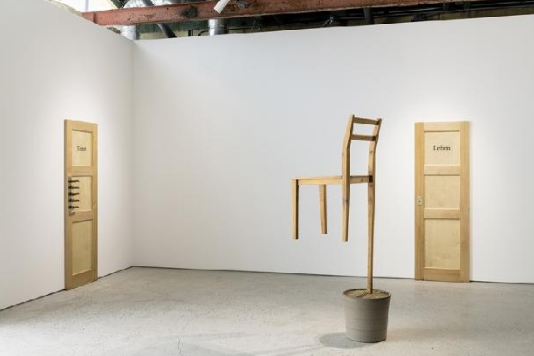
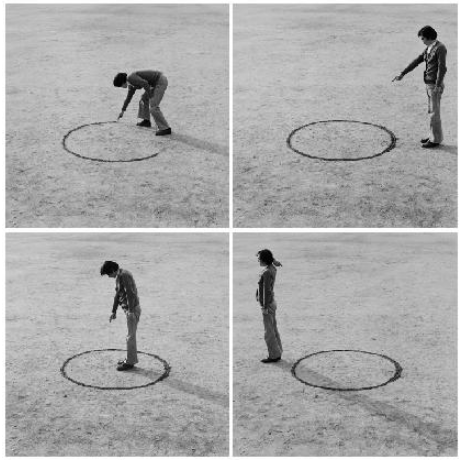
The National Museum of Modern and Contemporary Art, Korea is presenting “This is (Not) Conceptual Art,” an exhibition examining how conceptual practices developed in Korean contemporary art from the late 1960s onward.
Running through Oct. 11 at MMCA Seoul, the exhibition brings together approximately 140 works and archival materials by 28 artists. Participating artists include Lee Kun Yong, Kim Kulim, Sung Neung Kyung, Park Hyunki, Kim Soungui, Bahc Yiso, Ahn Kyuchul, Kim Beom and Inhwan Oh.
Conceptual art is generally defined as a practice that places ideas and language above the physical appearance of an artwork. The exhibition broadens that definition by examining how Korean artists used concepts, materials, performance and signs within the country’s changing historical conditions.
Experimental art of the late 1960s provided an early setting for Korea’s conceptual turn. During the 1970s and 1980s, artists used language, logic and performance to question the nature and existence of art. By the 1990s, conceptualism had developed into a method for reconsidering social reality through the combined use of language, materiality and form.
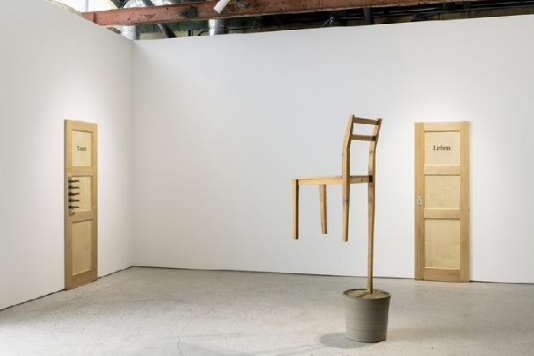
The exhibition’s title reflects its refusal to treat conceptual art as a single, fixed category. It considers related Korean terms—including conceptual art, conceptually oriented art and conceptualism—as overlapping approaches rather than identical practices.
The presentation is divided into four sections: “Language, Logic, Performance,” “Objects and Language,” “Mapping and Measuring” and “Manipulators of Signs.” Together, they examine conceptual practice beyond the conventional narrative of artworks becoming less material.
Key works include Lee Kun Yong’s “Logic of Place,” Kim Yongmin’s documentation of the performance “Damp Cloth,” Yoon Jin Sup’s “Diction” and Sung Neung Kyung’s “An Upside-Down Map of the World.”
Later developments are represented by works including Ahn Kyuchul’s “Five Questions for an Unknown Artist,” Bahc Yiso’s “Capital=Creativity” and “Wide World Wide,” Kim Beom’s “Landscape #1,” Inhwan Oh’s “Personal Ads” and Gimhongsok’s “The Talk.”
By placing Korean conceptual practices alongside the broader international discussion of global conceptualism, the exhibition considers how artists in different regions responded to distinct social, political and economic conditions.
SayArt.net
Maria Kim sayart2022@gmail.com