A landmark 1992 radio broadcast by French journalist Paule Chavasse dedicated four comprehensive hours to exploring the life and artistic legacy of Swiss sculptor Alberto Giacometti, offering an unprecedented audio portrait of the modernist master. The program, which aired on France Culture, assembled an extraordinary collection of testimonies from Giacometti's brothers Diego and Bruno, alongside critical analysis from leading art historians, poets, and philosophers including Jean-Paul Sartre, Michel Leiris, and Jean Genet. Through countless archival recordings and intimate interviews, Chavasse created a panoramic view of Giacometti's world, from his childhood in the valley between Switzerland and Italy to his cramped yet mythic Paris studio, capturing the essence of an artist who relentlessly pursued vision through both sculpture and painting.
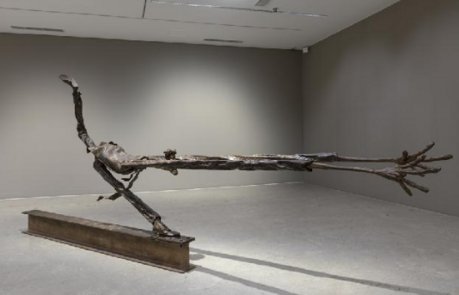
Giacometti's artistic journey was characterized by an obsessive quest to render reality more accurately, believing that the act of sculpting and painting allowed him to truly see his subjects for the first time. His distinctive elongated figures, which became his signature style, emerged from this process of intense observation and reduction. The 1992 broadcast captured his frugal, simple Parisian existence and the uncomfortable working conditions of his studio, where he produced works that would redefine twentieth-century sculpture. Voices of contemporaries like art dealer Aimé Maeght, writer James Lord, and photographer Sabine Weiss provided firsthand accounts of Giacometti's working methods and his famously mercurial temperament, which could shift from homeric rage to explosive laughter.
Remarkably absent from the extensive broadcast was significant discussion of Annette Giacometti, the artist's wife and primary model, who became the archivist of his work after his death in 1966 and founded the Fondation Alberto et Annette Giacometti. Annette passed away just one year after the program aired, having devoted her final decades to preserving her husband's legacy amid increasingly complex estate disputes. The broadcast's oversight reflects broader historical patterns in how artistic partnerships were often minimized, despite Annette's crucial role as both muse and steward of Giacometti's posthumous reputation. Her absence from the narrative raises questions about which voices are prioritized in art historical accounts.
The program also touched upon the endless succession battles and political-cultural conflicts surrounding Giacometti's estate, though Chavasse chose not to dwell on what she termed a bottomless bag of knots. These disputes over the control and distribution of his work have persisted for decades, raising poignant questions about what Giacometti himself might have thought of these conflicts. Would he have been saddened by the fighting, thrown one of his legendary rages, or laughed with the characteristic humor that friends recalled? The uncertainty highlights the complex relationship between artists' intentions and the institutional futures of their work.
Giacometti's philosophy that art is the material substance of vision continues to influence contemporary artists and thinkers, making the 1992 broadcast a valuable historical document. His work remains central to discussions of existentialist art and the phenomenology of perception, themes that resonated deeply with Sartre and other intellectuals of his time. As legal conflicts eventually resolve and his complete archive becomes more accessible through the foundation's work, Giacometti's legacy as both sculptor and painter who sought to see more clearly will likely gain new dimensions. The broadcast stands as a testament to how radio can create immersive, time-based portraits of artists that capture the voices and atmosphere surrounding creative genius.