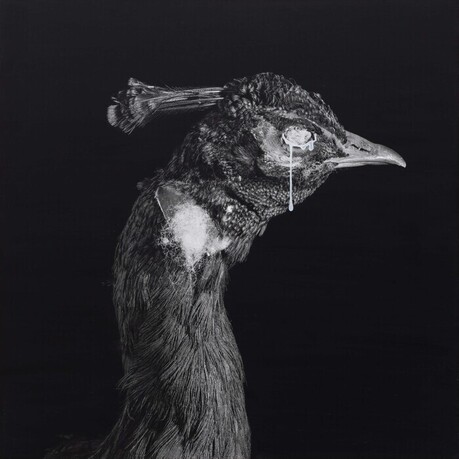
The Planches Contact photography festival is celebrating its 16th edition this year, having transformed the French coastal city of Deauville into a renowned destination for visual arts. Mayor Philippe Augier reflects on how the festival has established Deauville as a place where images are valued equally in both cinema and photography, creating a unique cultural identity for the Norman seaside resort.
The festival's origins trace back to 2010, when Augier recognized a significant gap in the city's cultural preservation. Despite Deauville being photographed by renowned artists since photography's earliest days - with Eugène Villette capturing villas under construction as early as the 1860s - the city possessed virtually no photographic archives or historical image collection. "When I became mayor in 2001, I noticed that Deauville had been photographed by the greatest artists since the birth of photography itself, yet the city had almost no collection: no images, no valorization of its history through photography," Augier explained.
This realization prompted Augier to begin acquiring historic photographs related to the city and organizing exhibitions on the famous boardwalks featuring works by masters like Jacques-Henri Lartigue and the Seeberger brothers. However, he understood that preserving the past wasn't sufficient. "I told myself that it wasn't enough to preserve the old: we also needed to create contemporary images," he noted. This philosophy led to the creation of Planches Contact in 2010, coinciding with Deauville's 150th anniversary.
The festival operates on a unique concept where nearly all exhibitions presented to the public are produced locally, with the exception of one major annual retrospective. Approximately 20 exhibitions are displayed throughout the city, both indoors and outdoors. This site-specific creation approach, built around artist residencies at Villa Namouna for several editions, remains the festival's core DNA. Initially, residencies took place exclusively in Deauville, but they have since expanded across the entire Norman territory, from sea to land.
To prepare for the future, the festival established the Young Talents Prize, which initially invited students from major European schools. The selection process has evolved to accept applications, receiving approximately 300 submissions this year. This identity was conceptualized from the beginning with guidance from photographer Bettina Rheims and the festival's first artistic director, Patrick Rémy.
The residency program operates on a clear principle of mutual benefit. "We pay the artists, we produce their exhibitions, prints, and framing. In exchange, they leave us a certain number of works at the end of the residency," Augier explained. This system has enabled the creation of an exceptional museum-quality photographic collection comprising more than 2,000 works. Some photographers have been exceptionally generous - Kishin Shinoyama left far more images than expected, Larry Fink donated his entire exhibition, and Paolo Roversi, Charles Fréger, and Harry Gruyaert have all enriched this cultural heritage.
Augier's personal connection to photography runs deep, as he has long collected portraits of famous women created by renowned photographers. Photography has always held an important place in his life, influencing his vision for the city's cultural development.
The Franciscaines cultural center, inaugurated in 2021, has become a central element of Deauville's cultural policy. The project emerged from Augier's personal commitment to making culture accessible to everyone. "I come from a very modest family where culture wasn't present. I always promised myself that if I ever had the means to act, I would make culture accessible to all," he shared. Originally conceived as a media library with a performance hall, the 2008 financial crisis halted the project, though acquisitions had already begun.
When the opportunity to purchase the Franciscaines site presented itself, Augier envisioned gathering all cultural offerings under one roof - museum, media library, auditorium, fab lab, and digital museum - ensuring everything functions in an interconnected manner. Today, visitors move freely between books, exhibitions, screenings, and living spaces in what has become a truly open cultural house. Everything on-site is free, including activities for children, except for major exhibitions.
The festival's artistic direction has been taken over by Lionel Charrier and Jonas Tebib, to whom Augier gave simple guidance: "Innovate, but respect the festival's DNA." They have introduced innovations such as thematization, with this year's festival built around the theme of "Intimacies." Other new features include offering the Young Creation Prize winner a residency, with 2025 including an exhibition at the InCadaqués festival and a residency at Villa Pérochon, Center for Contemporary Photographic Art in Niort. They have also commissioned a creation by Myriam Boulos produced in Beirut, while maintaining the logic of artistic commissioning.
Augier emphasizes creating more community life around the festival. This year's Saturday night party at the Franciscaines exemplified this vision - the stands were removed, transforming the space into a celebration venue until 3:30 in the morning. Photographers, journalists, and institutional leaders all gathered together, creating moments that unite the community. The festival has also expanded portfolio readings, now held directly at Villa Namouna where invited photographers reside, creating a stimulating family atmosphere for young authors.
The Festival Planches Contact 2025 will run from October 18, 2025, to January 4, 2026, continuing its mission to celebrate photography while fostering artistic creation and cultural accessibility in Deauville.