The Financial Times' luxury lifestyle supplement, How to Spend It (HTSI), has curated an exclusive collection of minimalist residences that embody the timeless principle of 'less is more.' These sleek interiors represent more than just design choices; they reflect a deliberate lifestyle philosophy embraced by leading architects, designers, and creative entrepreneurs across the globe. From London townhouses to Mediterranean retreats, each property demonstrates how strategic reduction can create spaces of profound elegance and functionality. The series showcases homes that strip away excess while amplifying character, proving that minimalism is not about emptiness but about intentional presence. This approach resonates particularly with professionals who view their living environments as physical extensions of their creative vision.
Among the standout British properties, James Brown and Christie Fels' East London residence perfectly captures the aesthetic they've cultivated at their sophisticated emporium. Their home serves as both a personal sanctuary and a manifestation of their curated retail philosophy, blending industrial heritage with refined simplicity. Similarly, architect John McAslan's southwest London house presents a fascinating dialogue between Victorian architecture and modern intervention. Rather than creating jarring contrast, McAslan's approach allows both periods to coexist in seamless flow, demonstrating how historical respect and contemporary clarity can harmonize. His design proves that minimalism need not erase history but can instead reveal its essential qualities through careful editing.
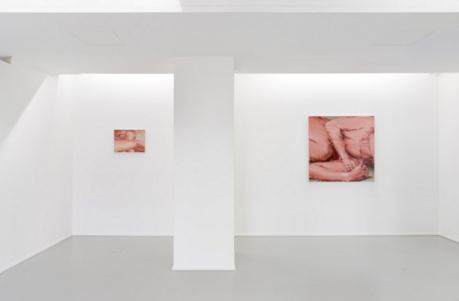
The international selections demonstrate minimalist adaptability across diverse contexts. Cameron Smith's Pasadena house distills the aesthetic he has honed at his destination store, creating a California residence that feels both aspirational and grounded. On the Greek island of Patmos, Peter Speliopoulos and Robert Turner's multi-story home rises as a vertical narrative of space and light, each level revealing new perspectives on Mediterranean minimalism. In Paris, Jérémy Rocher and Kym Ellery's Maison Rocher has become the city's most talked-about apartment, functioning simultaneously as a family home and an in-demand anti-gallery that challenges conventional boundaries between domestic and exhibition space. These projects show how geography influences minimalist expression.
Australian architect William Smart's Sydney residence adds another dimension to the conversation, its space-age qualities reflecting both his professional expertise and personal taste. The house demonstrates how minimalist principles can embrace futurism without sacrificing warmth. Meanwhile, jewelry designer Francesca Amfitheatrof's Mediterranean holiday home takes her back to her roots, creating what she describes as a 21st-century cave that reconnects her with ancestral landscapes through contemporary design language. Architect and interior designer Martin Brûlé's Paris pied-à-terre completes the collection as an ode to the art of living, showing how minimalism can celebrate daily ritual. Each creator brings their professional discipline into their domestic sphere.
These homes collectively illustrate that minimalism has evolved far beyond white walls and sparse furnishings. It has become a sophisticated strategy for living that prioritizes quality over quantity, experience over accumulation, and intention over impulse. The HTSI series reveals how this approach attracts creative professionals who see their living spaces as extensions of their artistic and commercial philosophies. As property values climb and urban density increases, these examples offer a compelling alternative: not bigger spaces, but better ones, where every element earns its place. This curated collection serves as both inspiration and instruction for those seeking substance through subtraction.