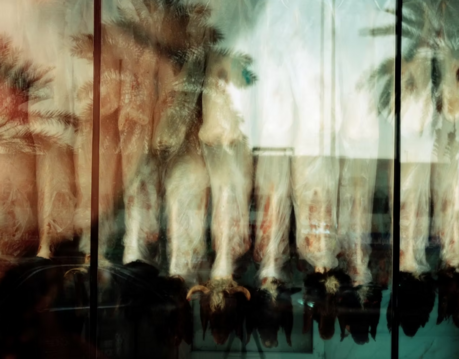
Photographer Michel Claverie has embarked on a remarkable artistic pilgrimage, retracing the steps of French writer and naval officer Pierre Loti through Egypt more than a century after Loti's legendary 1907 journey. Claverie literally placed Loti's book 'La Mort de Philæ' in his suitcase and departed, using the author's vivid descriptions as his guide through the ancient landscape. The resulting series of pinhole photographs, created using the antique sténopé method, will be featured in both an exhibition and a forthcoming book that parallel Loti's literary passages with visual imagery. This project represents a unique dialogue between nineteenth-century literature and twenty-first-century photography.
Pierre Loti, whose real name was Julien Viaud, remains one of France's most celebrated Orientalist writers, known for his evocative accounts of exotic locales filtered through a distinctly European sensibility. His 1907 Egyptian voyage produced some of his most poignant reflections on the decline of ancient civilizations and the impact of modernity on traditional ways of life. 'La Mort de Philæ' chronicles his journey along the Nile, capturing his melancholic observations as he witnessed archaeological treasures threatened by progress and time. The book has inspired generations of travelers, but Claverie's project represents the first systematic attempt to visually reconstruct Loti's exact path using nineteenth-century photographic technology.
The sténopé technique, more commonly known as pinhole photography, involves creating images without a lens by allowing light to pass through a tiny aperture onto photographic paper or film. This method produces dreamlike, slightly distorted images with infinite depth of field and requires exposures lasting several seconds or even minutes. Claverie chose this painstaking process deliberately, believing its temporal qualities and inherent imperfections would echo the nostalgic, romantic tone of Loti's prose. Each photograph becomes a meditation on time itself, bridging the gap between Loti's era and our own through a shared optical limitation that forces both photographer and viewer to slow down and observe carefully.
The exhibition, running from Friday, January 9 through Thursday, January 15, presents Claverie's photographs alongside carefully selected excerpts from Loti's original text. Visitors will encounter visual and literary juxtapositions that highlight both the changes and continuities in the Egyptian landscape over the past 117 years. Ancient temples appear as ghostly silhouettes, while modern elements intrude subtly, creating a dialogue between past and present. The accompanying catalogue, scheduled for publication in March, will expand this conversation with additional images and scholarly essays contextualizing both artists' work and exploring themes of cultural memory and representation.
What makes this project particularly compelling is Claverie's refusal to simply illustrate Loti's text. Instead, he uses the pinhole camera's unique properties to capture the emotional atmosphere that Loti described—the quality of light at dawn over the Nile, the hazy distances that made monuments appear dreamlike, the sense of temporal dislocation that pervades the original narrative. The photographer spent months traveling by boat and camel, often waiting days for atmospheric conditions that would produce the desired effect, much as Loti himself had done with words. This patience reflects a deeper commitment to understanding not just what Loti saw, but how he saw it.
This artistic dialogue between literature and photography demonstrates how contemporary artists can engage with historical texts in ways that illuminate both the source material and our present moment. Claverie's work raises questions about representation, colonial gaze, and the ethics of Orientalism while simultaneously celebrating Loti's genuine appreciation for Egyptian culture. As viewers move through the exhibition, they are invited to consider their own relationship to travel, documentation, and the passage of time. The project ultimately suggests that some landscapes exist as much in imagination as in physical reality, and that the most meaningful journeys are those that transform the traveler as much as they document the destination.