Andrew Cranston is a Scottish painter born in 1969 in Hawick, Scotland, who has gained international recognition for his quietly beautiful narrative paintings. He studied at the Glasgow School of Art, where he developed his distinctive approach to storytelling through visual art. Cranston's studio practice centers on creating contemplative scenes that draw from literary sources and personal memory. His paintings invite viewers into intimate, reflective spaces that reward careful observation. The artist works with unconventional materials and formats, most notably painting directly on book covers, which adds layers of meaning to his already rich visual narratives.
The distinctive quality of Cranston's work lies in its understated elegance and philosophical depth. Rather than focusing on grand gestures or dramatic subjects, he captures everyday moments and interior spaces that carry profound emotional resonance. His compositions often feature figures in quiet contemplation, empty rooms waiting for occupancy, or landscapes that exist between reality and dream. This approach creates what art critics have described as a "quietly beautiful" aesthetic. His paintings serve as meditations on time, memory, and human consciousness.
Cranston's technical approach is as thoughtful as his subject matter. He frequently works on a small scale, encouraging viewers to draw near and engage intimately with each piece. His use of varied textures and surfaces creates a dialogue between the literary and visual arts. The worn, textured surfaces of vintage book covers provide a history-laden foundation for his painted narratives. This technique suggests that every image emerges from layers of previous stories and meanings. The result is a unique fusion of material history and painted imagination.
Thematically, Cranston's work explores the intersection of time, memory, and place. His paintings often feel suspended in time, capturing moments that are both specific and universal. Interiors play a significant role in his work, serving as metaphors for psychological states or as containers of accumulated experience. Through his nuanced handling of light, color, and composition, Cranston transforms ordinary scenes into profound meditations. His work asks viewers to slow down and consider the deeper meanings hidden in everyday life.
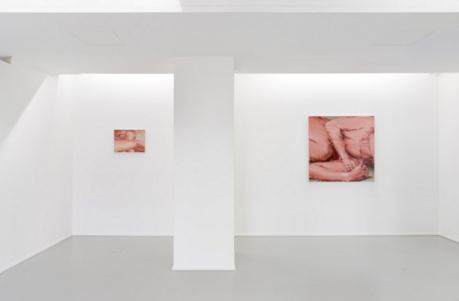
Cranston is represented by prominent galleries including Ingleby Gallery in Edinburgh and Karma in New York. His work has been featured in numerous exhibitions that showcase his ability to create immersive environments. In these exhibitions, individual paintings converse with one another, building larger narratives about art, life, and the creative process. Recent shows have highlighted his growing influence in contemporary art circles. His international recognition continues to expand as more collectors and institutions discover his unique vision.
As Cranston continues to develop his practice, he remains committed to the idea that painting can offer profound insights into the human condition. His quietly beautiful works serve as antidotes to the noise and haste of contemporary life. In an art world often dominated by spectacle and digital media, Cranston's intimate, thoughtfully crafted paintings demonstrate the enduring power of subtlety and restraint. His studio practice proves that small-scale, contemplative work can still have a major impact on how we see and understand the world around us.