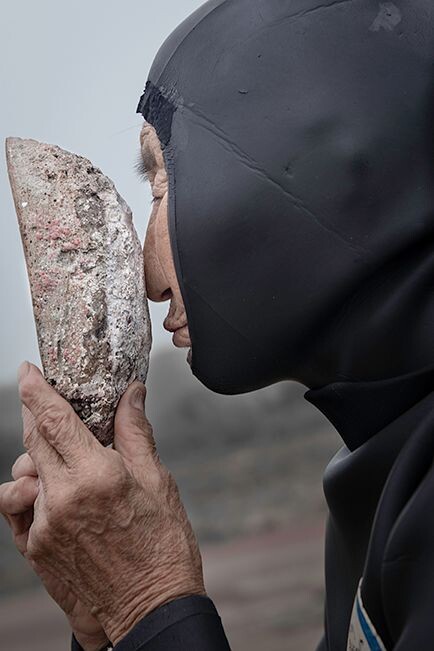
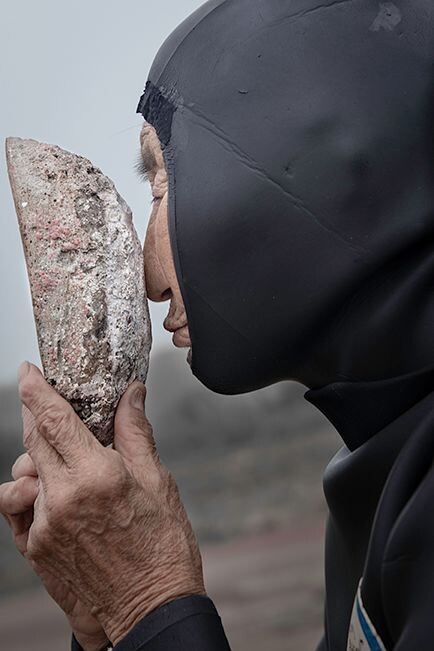
Photo: Yu Yong Ye
For the haenyeo of Gapado, the sea is not an abstract expanse measured only by coordinates. It is learned through the body — through tides, currents, wind, underwater fields, seasonal seaweed, and the length of a held breath.
That is where Yu Yong Ye’s solo exhibition Second Skin: 303.8ha begins. The number in the title refers to the area of Gapado’s communal fishing ground. On an administrative map, it is a measured zone. For haenyeo, however, it is a lived territory remembered through skin, lungs, muscle and repeated immersion.
Yu is a photographer, a haenyeo and the head of the Gapado fishing village community. She did not begin as a woman of the sea. After moving to Gapado, a small island south of Jeju, she first approached the haenyeo community through the lens of a camera. She photographed their faces, labor and gestures from the edge of the sea. Over time, however, observation was no longer enough.
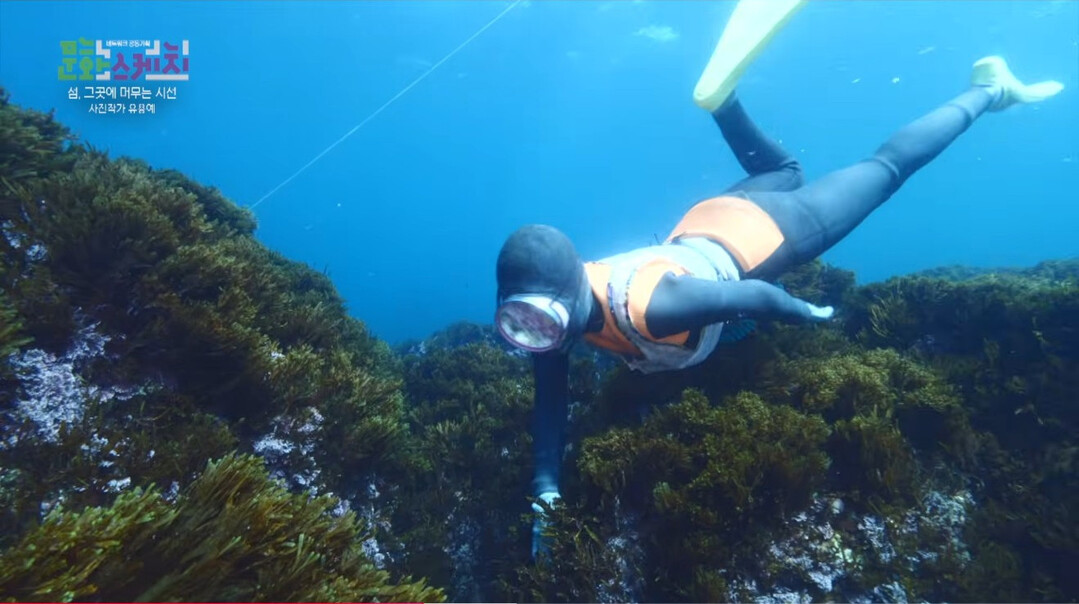
Photo: Screenshot from KBS Jeju’s Culture Sketch
She learned muljil, the breath-hold diving practice of Jeju haenyeo. She entered the water herself, learned how long the body must endure to gather a single horned turban shell, and came to understand that the stories of the women she photographed were no longer separate from her own. From that point on, the sea was no longer merely a subject. It became a place of life, and recording became a form of testimony.
What Yu records is not only the labor of haenyeo. It is also the changing condition of the sea. Seaweed that once grew abundantly has disappeared. Familiar underwater fields have shifted. The sea remembered by the divers’ bodies is no longer the same sea.
Climate change is often described through data — average temperatures, sea levels, carbon emissions. In Yu’s work, however, ecological crisis arrives first through the body. The water feels different. Sea plants that appeared in previous seasons are no longer there. Routes once known by memory become unfamiliar.
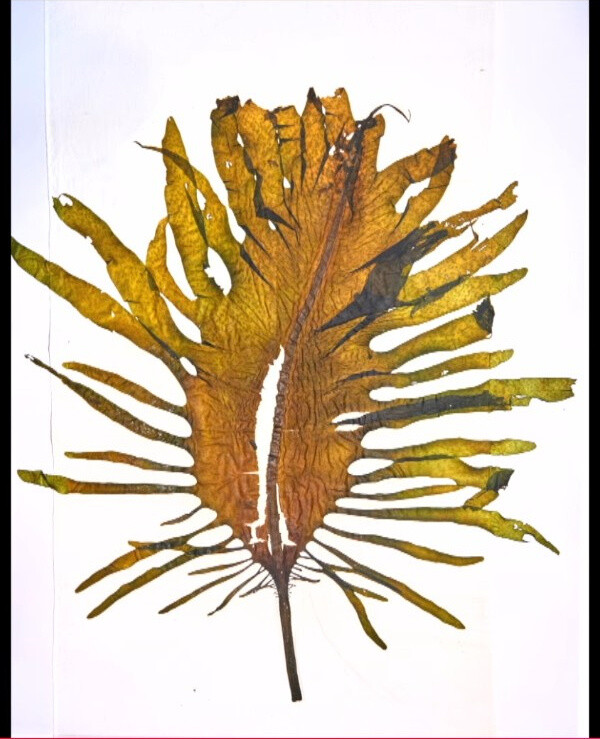
Photo courtesy of the artist
For this reason, “second skin” is more than a metaphor. For haenyeo, the sea is not a landscape outside the body. It is another layer of skin through which coldness, salinity, pressure, breath and subtle environmental changes are registered. Yu translates those sensations into photography, video, installation, specimens, maps and testimony.
One of the central works in the exhibition is Haenyeo Yeojido, a map drawn from the memory and language of haenyeo. Conventional maps look down on the sea from above. A haenyeo’s map is made differently. It follows routes the body has taken, the names of underwater fields, the flow of currents, and the memories held by those who have worked in the water for decades.
In this sense, Haenyeo Yeojido is not only a map. It is a record of communal knowledge at risk of disappearance. It is a sensory geography shaped by people who have lived through the sea rather than merely looked at it.
Yu’s seaweed specimen work follows the same logic. The specimens are not simply collected objects. They are attempts to hold on to forms that are vanishing. Tot, miyeok, gamtae and mojaban are not just botanical names. They are part of the working life of haenyeo. When the marine ecosystem changes, the labor of divers and the rhythm of the village change with it.
The force of Yu’s practice lies in the fact that art and daily life are not separated. She opens her studio and photo space on Gapado, meets visitors to the island, goes into the sea on diving days, works alongside haenyeo, joins ecological research teams, and returns again to images and records. For Yu, art does not begin only in the exhibition space. It begins in entering the water, noticing what is disappearing, and finding a way to make that change visible to others.
Second Skin: 303.8ha is therefore not an exhibition that simply represents the sea. It speaks of a changing sea through the language of lived experience. It brings forward temperatures that statistics cannot fully explain, labor that numbers cannot contain, and memories that do not appear on official maps.
The sea of Gapado is 303.8 hectares.
For Yu, however, it is not only an area. It is the length of breath, the direction of water, the place where seaweed once grew, and the names that haenyeo have carried in their bodies.
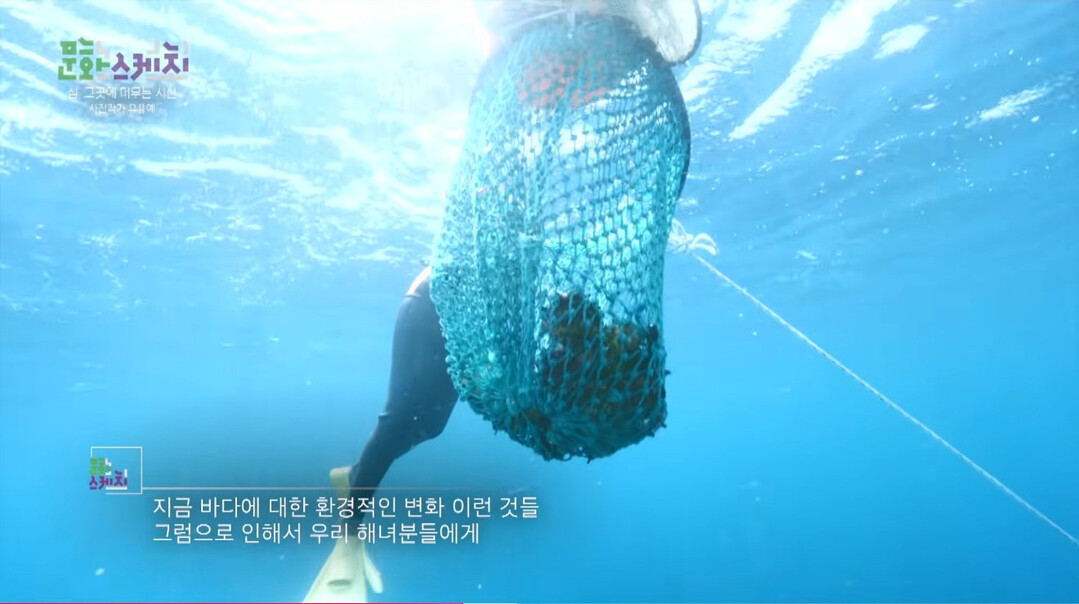
Photo: Screenshot from KBS Jeju’s Culture Sketch
Her life itself has become a form of record. And that record asks a question that extends far beyond Gapado: When do we begin to notice what is disappearing? And when will society listen to the changes that the body has already felt?
Yu Yong Ye’s Second Skin: 303.8ha is on view at Space Pulsoop in Jongno-gu, Seoul, through July 31. The exhibition presents photographs, video and installation works based on the ecological changes of Gapado’s sea as experienced and documented by the artist. It brings together portraits and testimonies of haenyeo, Haenyeo Yeojido, and works recording a disappearing marine environment. An artist talk will be held at 4 p.m. on July 25.
[Sayart = Maria Kim] SayArt.net
sayart2022@gmail.com