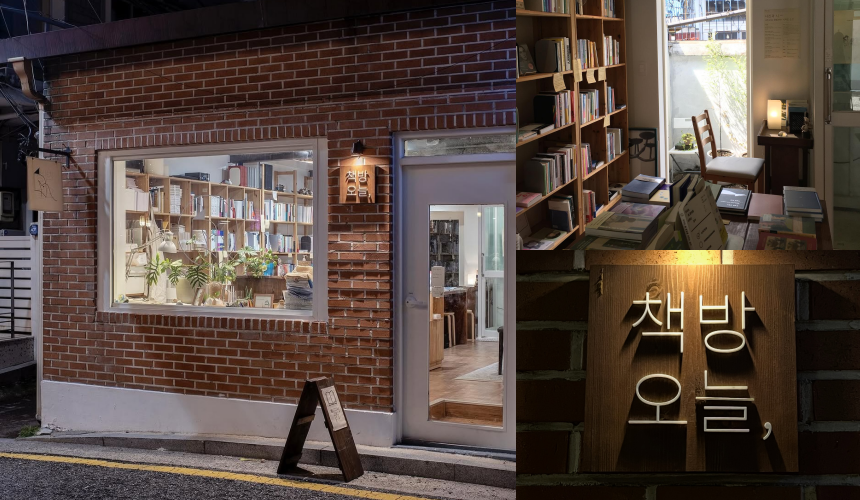
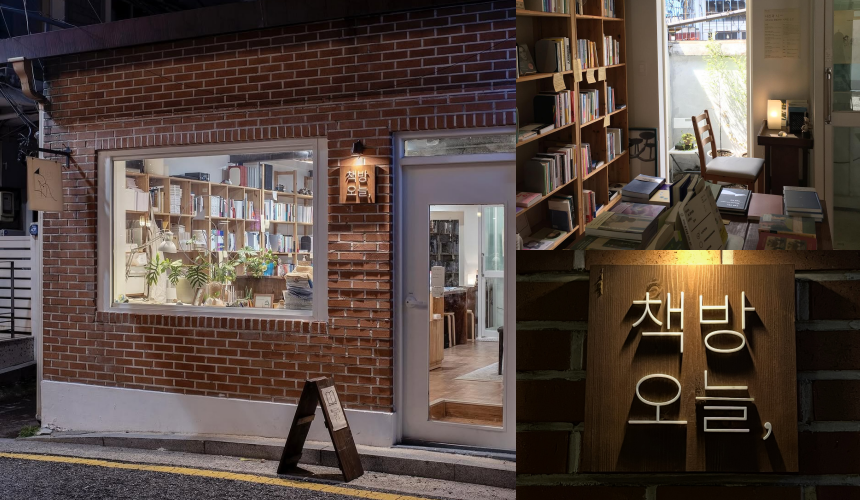
SEOUL — Onul Books, the independent bookstore established with the involvement of Nobel Prize in Literature laureate Han Kang, has officially ended its operations following the sale of the building where it was located. Speaking ahead of the bookstore's final public reading event, Han reflected on the space's eight-year history and said she hopes it may reopen in the future if circumstances permit.
According to SayArt on July 13, Han met reporters before the bookstore's final reading event on July 7 at Onul Books in Seoul's Seochon neighborhood. She said she was grateful that the bookstore had remained in operation for eight years and described the experience of running the space as something she deeply appreciated.
Since opening, Onul Books has hosted a broad range of literary and cultural programs, including author readings, book clubs, reading and writing workshops, exhibitions, and small performances. Han said these events allowed the bookstore to build lasting connections with readers, adding that sharing the space with visitors over the years became one of its most meaningful experiences.
Onul Books first opened in Seoul's Seocho District in 2018. The bookstore later relocated to Seochon in 2023 as it adapted to changing business conditions. Public interest in the space increased significantly after Han was awarded the Nobel Prize in Literature, drawing visitors from across South Korea as well as international readers interested in contemporary Korean literature.
According to publishing industry sources, Han was closely involved during the bookstore's early years, personally selecting books, arranging displays, and planning cultural programs. As visitor numbers increased, she stepped away from day-to-day management while continuing her relationship with the bookstore as a registered board member.
Recalling one of her strongest memories, Han spoke about an evening while preparing the bookstore before its opening. With no air conditioning installed, she had left the doors open while arranging books on the shelves. A passerby returning home entered the bookstore, picked up one of the books she had just placed on display, and quietly began reading. Han said that moment demonstrated how naturally the space had begun to welcome readers.
She also highlighted the bookstore's "Echo Reading" program as one of its defining events. The format invited an author to begin reading a text aloud before audience members continued the reading together. Han recalled one gathering during heavy rain, when the sound of raindrops falling on the building's wooden roof became part of the reading experience, creating a distinctive atmosphere shared by both writers and readers.
The bookstore's operations came to an end after the building housing Onul Books was sold. Han explained that she has been spending extended periods overseas, making it difficult to secure and prepare a new location in the near future. She nevertheless expressed hope that, after sufficient preparation, Onul Books could eventually welcome readers again in a new space.
Throughout its eight years of operation, Onul Books developed beyond a traditional bookstore into a venue for literary exchange and community-based cultural programming. Whether the bookstore will reopen remains dependent on future operational and logistical circumstances, according to Han's remarks.
SayArt.net
Jason Yim yimjongho1969@gmail.com