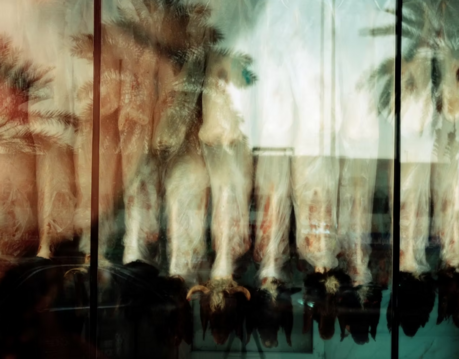
TIME magazine has unveiled its annual Top 100 Photos of 2025, featuring an extraordinary collection of images that capture the year's most significant moments and powerful human stories. The carefully curated selection showcases exceptional photography ranging from split-second action shots of breaking news events to compelling images from long-term documentary projects, serving as a visual testament to 2025's major events and photography's unique power to tell the world's most important stories.
Katherine Pomerantz, TIME's Director of Photography for the past eight years, leads the comprehensive selection process that begins each January and continues throughout the year. The collaborative effort involves her entire photo team, including five photo editors who work together to gather and review potential images monthly. "Every year we put together our top photos of the year," Pomerantz explains. "It's a complete collaboration of the entire photo team and my favorite project of the year."
The selection process intensifies in August when the team begins narrowing down their choices through regular meetings filled with debate, discussion, and collaborative decision-making. "Part of it is debate, part of it's agreement, lots of laughter. It's a ton of fun," Pomerantz remarks. The team benefits from diverse perspectives as each editor follows different photographers and maintains unique contacts, allowing them to discover a wide range of compelling images from photographers worldwide.
This year's collection features several standout images that left lasting impressions on the editorial team. Among the most memorable is a photograph by Vadim Makhorov showing polar bears at an abandoned research station on Koluchin Island, off Chukotka, Russia, taken on September 14. Another powerful image by Moises Saman for TIME depicts a woman cooking in the shadows of a former orphanage while children move through adjoining rooms, now converted into living quarters for families displaced from Khartoum in Sudan's civil war.
Pomerantz emphasizes that certain images immediately grab the team's attention with their undeniable power. "Sometimes [editors] send her a message with a photo and say that it's so strong it has to be set aside," she notes. Different team members gravitate toward various styles – some prefer graphic, chaotic images with high tension, while others are drawn to different compositional elements. For Pomerantz personally, exceptional skill and vision displayed during breaking news moments or rapidly changing situations speak most powerfully to her.
One photograph that particularly resonated with Pomerantz was Carol Guzy's award-winning image of a security guard positioned on one side of a pillar outside a building while a distressed mother and her young child stood nearby following an immigration court hearing for the detained husband and father. "After her husband was detained by ICE agents on August 20, a woman with her child wept outside a federal building in New York City; a security guard was moved to tears as well," the caption explains.
"The one that comes immediately to mind is the Carol Guzy image of a mother and child outside of the detention center in New York," Pomerantz says. "And they're both in tears and then sort of around the corner is a security guard who's also crying. And her perspective where you can see both these emotional moments happening at the same time, but it doesn't seem like they can see each other, I think is a really, really powerful moment." This compelling photograph was brought to the team's attention by Brooklyn-based senior photo editor Kim Bubello, who has been following Guzy's work.
The human element serves as a crucial component throughout the final selection of 100 photographs. "A thousand percent," Pomerantz confirms when asked about the importance of human emotion. "Raw human emotion is something we're all craving. When you can see that in a photograph, there's nothing more impactful than that." While many images showcase pain, tragedy, and devastation reflecting the year's difficult events, the collection also includes moments of contemplation, contentment, and jubilation, along with photographs of people accomplishing incredible, inspirational achievements.
The editorial team pays extensive attention not only to individual image selection but also to the careful sequencing and ordering of the final 100 photographs. "It's very intentional to represent the whole range of human emotion," Pomerantz explains. "When we put [all the images] together as 100 photos, we're very intentional about the sequencing." This thoughtful curation ensures that the collection tells a comprehensive story of human experience throughout 2025.
When Pomerantz first joined TIME, the selection process involved printing every photograph and spreading them across conference room tables for physical review. Today's team meets online to discuss and share images, though the collaborative conversation approach remains unchanged. Pomerantz particularly values the respectful disagreements that arise during final selections, describing them as "good practice for us to talk about photography, to really think about the image."
Selecting the perfect cover image presents one of the year's most challenging decisions. This year's cover features Britta Jaschinski's striking photograph of a green sea turtle under ultraviolet light, revealing a human handprint on the shell – demonstrating cutting-edge forensic techniques used against poachers and animal traffickers. Like Guzy's featured image, this photograph was discovered when a photo editor saw it online and brought it to the team's attention.
"We looked at it and we reached out to the photographer to get the backstory of the photo and it ended up on the cover," Pomerantz explains. The image proved ideal for multiple reasons: it works exceptionally well in vertical format, creates visual impact that stops viewers in their tracks, and tells an important story about how new technology helps fight wildlife crime. "It's one of those that stops you and you're like, 'What's going on here?' So you have to, hopefully, pick up the magazine and take a closer look," Pomerantz notes.
The cover selection strategy deliberately avoids simply choosing the most famous photograph from the year's biggest news event, as that approach might mislead readers into thinking the magazine focuses on a single story rather than celebrating the year's best photography. Instead, the team seeks images that represent the broader mission of showcasing powerful photographs captured by talented photographers worldwide throughout 2025.
Additional notable images in this year's collection include Philip Holsinger's photograph documenting the arrival of three planes in El Salvador on Saturday night, March 15, carrying 261 men deported from the United States. While a few dozen were Salvadoran, most were Venezuelans whom the Trump Administration had designated as gang members and deported with little or no due process.
The complete collection celebrates the full spectrum of photographic excellence, from action-packed images of chaotic scenes to inspiring moments of human triumph and resilience. Under Katherine Pomerantz's leadership, the TIME photo editorial team has once again delivered a comprehensive visual summary that serves as the perfect conclusion to 2025's most significant photographic achievements.
Readers can explore the complete collection of TIME's Top 100 Photos of 2025 online and in TIME magazine's newest print issue, "Best Photos of the Year," which arrives on newsstands and in stores next week. The feature continues TIME's long-standing tradition of recognizing exceptional photography while documenting the year's most important visual stories from around the globe.