August is usually the final stretch of summer. In Korea’s art world, it is already beginning to look like autumn.
Several major exhibitions are entering their final weeks, while museums are opening shows that will lead directly into one of the busiest periods on Korea’s cultural calendar. The Busan Biennale opens at the end of August, followed in early September by Frieze Seoul, Kiaf SEOUL and the 16th Gwangju Biennale.
The transition has already begun.
Among the exhibitions closing soon is Beyond Impressionism: Masterpieces from the Detroit Institute of Arts, on view at the Sejong Museum of Art through August 23. Drawing from the collection of the Detroit Institute of Arts, the exhibition traces major shifts in modern European art from Impressionism toward the experiments that eventually transformed the representation of space and form.
At Esther Schipper Seoul, Ethiopian artist Merikokeb Berhanu’s Cellular Memory closes on August 14. Her first solo exhibition in Asia presents six new paintings in which organic forms reminiscent of bodies, plants and cells coexist with images that evoke technological circuits.
Nature and technology do not simply oppose each other in Berhanu’s paintings. They appear to inhabit the same unstable visual system.
Another exhibition nearing its end is Korean ink painter Park Dae Sung’s Where Silence Dwells at Gana Art Namsan, through August 17. Park has spent decades working with traditional ink and paper while radically expanding their scale and pictorial possibilities. His landscapes do not reproduce tradition so much as reconstruct it through a contemporary language of painting.
At the Hangaram Design Museum of Seoul Arts Center, Fernando Botero: The Aesthetics of Form continues through August 30. Bringing together 112 paintings, drawings and sculptures, the exhibition looks beyond the Colombian artist’s famously voluminous figures to the relationship between mass, classical art and memories of Latin America that shaped his distinctive visual language.
As these exhibitions close, another group is beginning.
The National Museum of Modern and Contemporary Art, Korea (MMCA) opened Lee Dai-won: Nothing Will Make You Sad at its Deoksugung branch on August 6. The first major Lee Dai-won retrospective organized by MMCA brings together more than 120 works and around 100 archival materials.
Lee is widely recognized for landscapes constructed from luminous dots and intense color, particularly his recurring orchard scenes. The exhibition follows how this highly individual language developed across his career. It runs through November 8.
MMCA Seoul is also moving into its autumn program.
The Korea Artist Prize 2026 brings together Lee Haemin Seon, Lee Jungwoo, Jeon Hyunsun and Hong Jinhwon, whose practices address questions ranging from material and memory to technological systems, painting, images and power.
Also on view is This Is (Not) Conceptual Art, an exhibition examining the emergence and development of conceptual practices in Korean contemporary art since the late 1960s.
But one of the season’s most anticipated exhibitions opens on August 27.
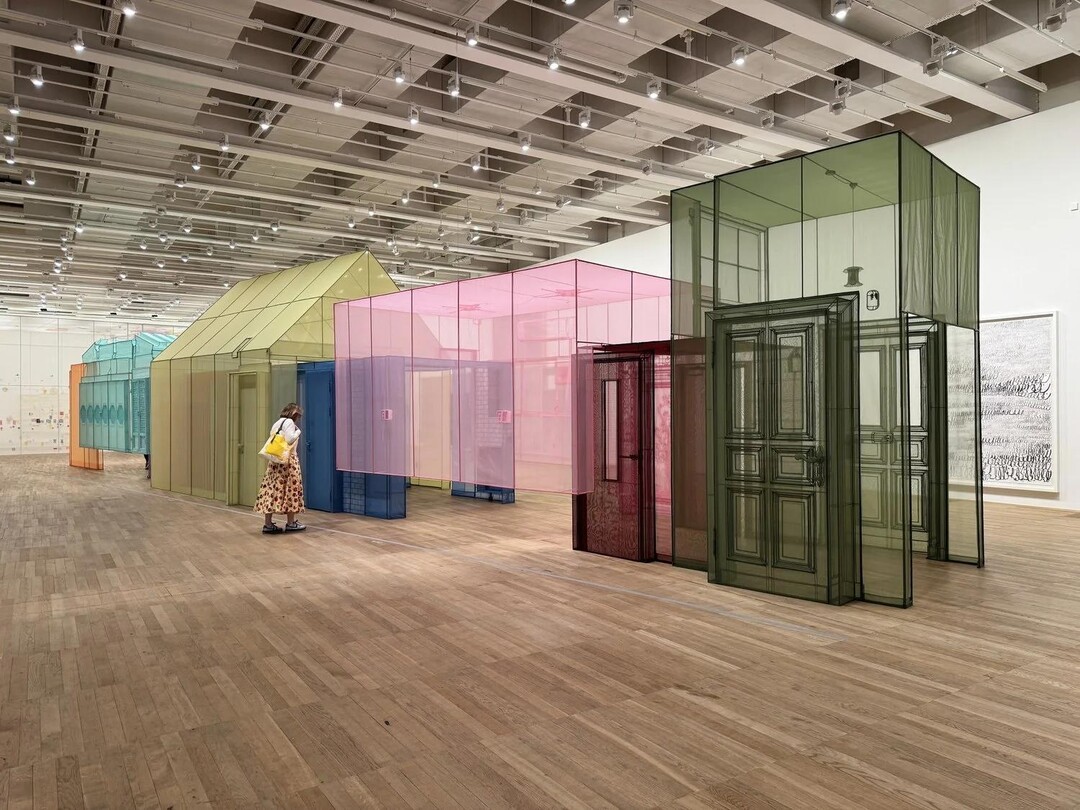
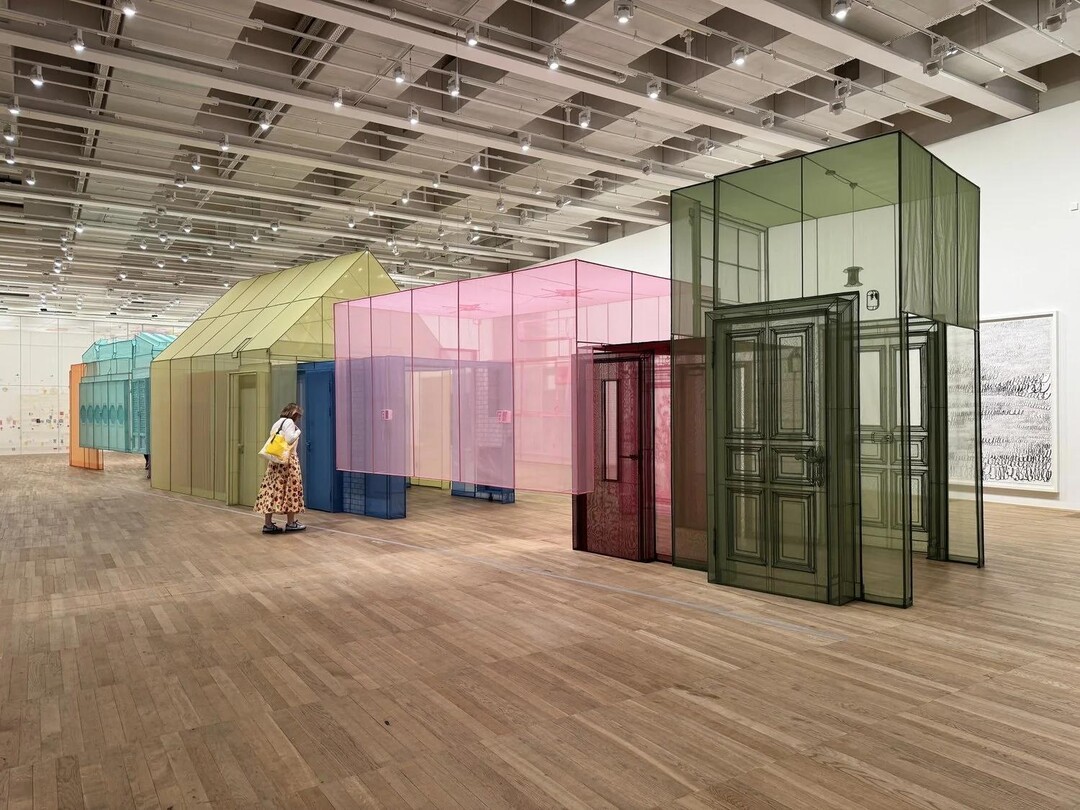
MMCA Seoul will present a major solo exhibition by Do Ho Suh, bringing together early works, major installations and ongoing projects from an artist whose practice has long examined migration, habitation, memory and identity.
Suh’s subject has never been simply the house.
His translucent architectural structures ask how places remain in the body after we leave them, and how personal memory can be carried across borders. The exhibition continues through February 9, 2027.
Elsewhere in Seoul, several major exhibitions will remain on view throughout the autumn.
At Space K Seoul, KAWS is presenting FRIENDS AND NEIGHBORS, his first museum solo exhibition in Korea, through December 27. The exhibition includes more than 20 paintings and sculptures and considers the comfort, tension and vulnerability embedded in familiar relationships.
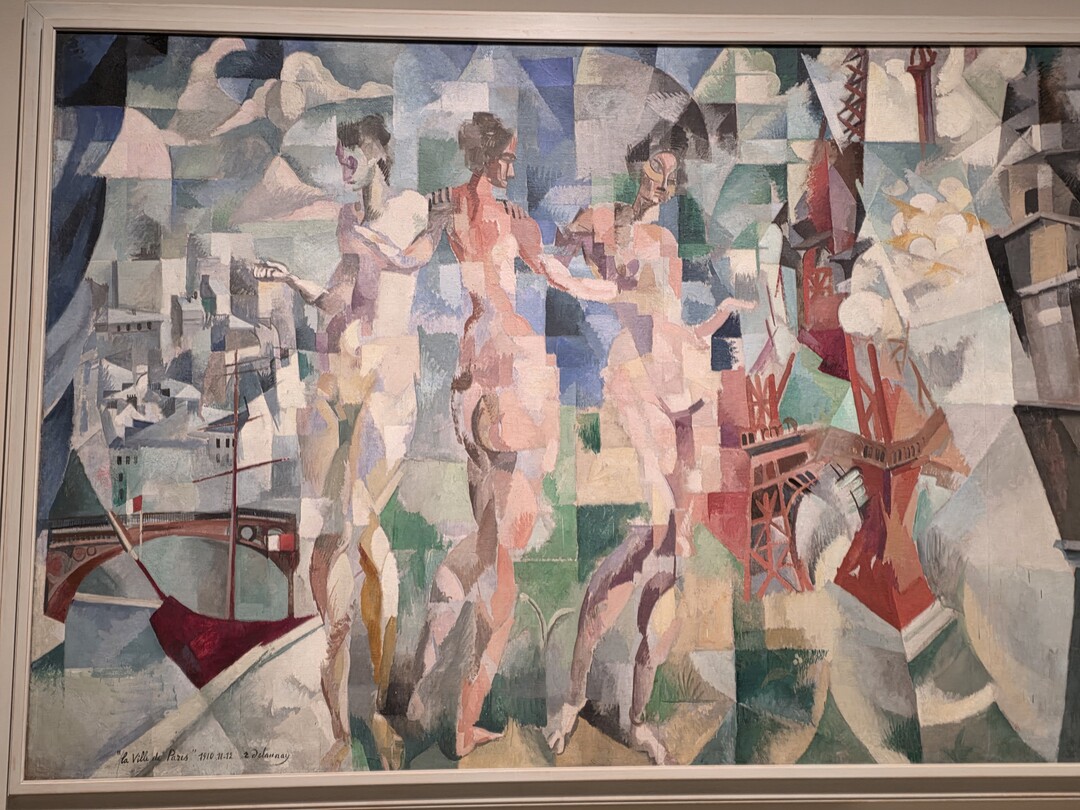
At Centre Pompidou Hanwha, which opened in Seoul’s 63 Building complex in June, The Cubists: Inventing Modern Vision continues through October 4.
Drawn largely from the collection of the Centre Pompidou in Paris, the exhibition brings together around 90 works charting Cubism from 1907 through the 1920s, including works associated with Pablo Picasso, Georges Braque and Juan Gris.
Cubism did more than fragment objects into geometric forms. It challenged the assumption that a painting should represent the world from a single fixed viewpoint.
That question — how we see — remains one of its most enduring legacies.
For a different history of abstraction, the Seoul Museum of Art is presenting Yoo Youngkuk: Mountains Are Within Me through October 25. Marking the 110th anniversary of the Korean modernist’s birth, the exhibition brings together approximately 170 works, drawings and archival materials.
For Yoo, the mountain was not simply a landscape to reproduce. It became a structure of points, lines, planes and colors through which nature could be reconstructed as painting.
The pace accelerates at the end of August.
The 2026 Busan Biennale opens on August 29 under the title Dissident Chorus. Through visual art, moving images, performance, sound and choreography, the biennale considers whether different voices can coexist without being forced into harmony.
Then Seoul turns toward the market.
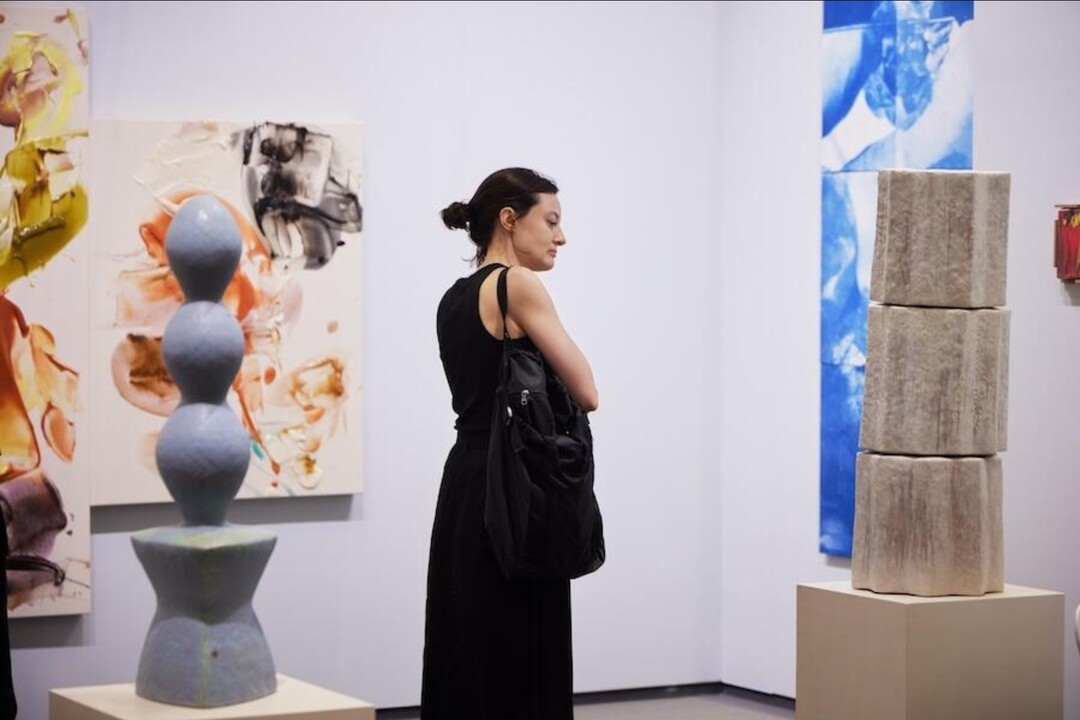
Frieze Seoul returns to COEX from September 2 to 5 for its fifth edition, bringing together more than 125 galleries from 30 countries. More than 70 percent of participating galleries are based in the Asia-Pacific region, while more than 50 exhibitors already operate permanent spaces in Seoul.
The fair again takes place alongside Kiaf SEOUL, while Frieze Week extends beyond COEX through exhibitions and events across the city. Major museum exhibitions during the week include Do Ho Suh at MMCA Seoul, Yoo Youngkuk at the Seoul Museum of Art and The Cubists at Centre Pompidou Hanwha.
Three days after Frieze opens, the 16th Gwangju Biennale begins.
Running from September 5 to November 15, You Must Change Your Life takes its title from the final line of Rainer Maria Rilke’s 1908 poem Archaic Torso of Apollo. Under artistic director Ho Tzu Nyen, the biennale asks how artistic practice might produce new capacities and forms of life at a moment when transformation feels both urgent and unresolved.
Taken individually, these are exhibitions, biennales and art fairs with very different purposes.
Seen together, they reveal something larger.
Korea’s autumn art season no longer begins neatly in September. Museums begin setting the stage in August; the Busan Biennale opens before the month ends; the market arrives with Frieze and Kiaf; and the Gwangju Biennale follows days later.
By the time September arrives, Korea’s art season is already in motion.
[Sayart = Maria Kim]
sayart2022@gmail.com